The biggest mistake enterprises can make in the AI race is assuming that buying more GPUs automatically means winning the AI race. The reality is far more complicated.
AI workloads have moved from small experiments to continuous production systems where inference, agents, and real-time decision-making run around the clock. This shift has turned compute into a strategic business decision, not just an IT purchase.
NVIDIA has already pointed out that inference is becoming a revenue game where ‘tokens are the unit of intelligence’ and throughput per megawatt defines AI factory economics. At the same time, IEA projects global data center electricity consumption will rise from 485 TWh in 2025 to 950 TWh in 2030, with AI-focused data center electricity use tripling during that period.
This is where the real AI compute strategy challenge begins. Should companies build their own AI factories or rent capacity from cloud providers? The answer is not as simple as choosing one side. The future belongs to organizations that can balance control, flexibility, and cost through a smarter infrastructure approach.
Building a Dedicated AI Factory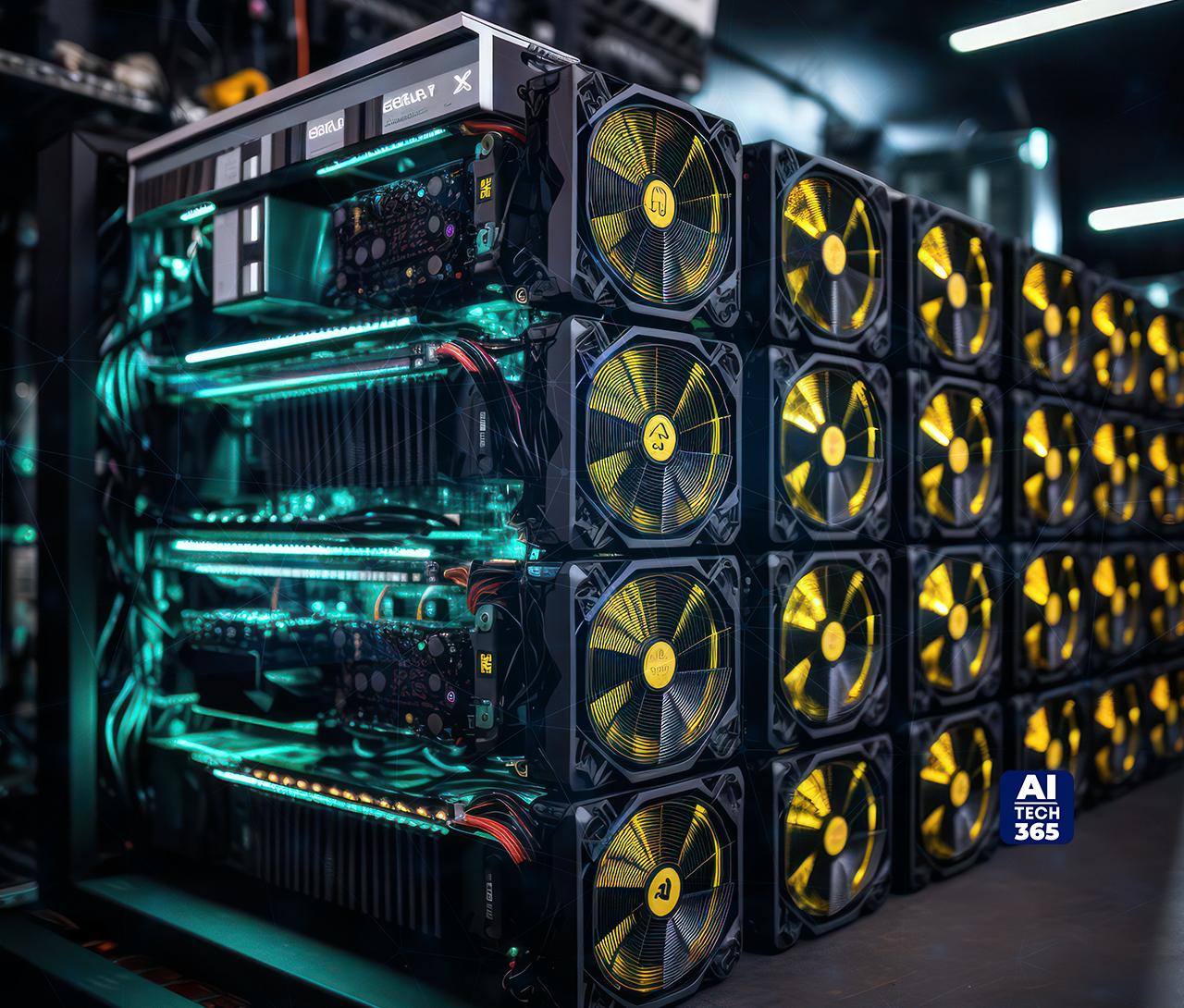
A modern AI factory is not, just a typical data center packed with servers. It’s purpose-built infrastructure, made for AI workloads. In these places you usually see high-performance computing clusters, advanced networking, liquid cooling systems and specialized AI hardware, all tuned to push huge training and inference demands.
For firms that have predictable and steady AI usage, owning infrastructure can turn into a real edge. The main win is control, and not only in a vague way.
When an enterprise runs its own AI setup it gets to decide where the data stays, how tasks are scheduled, and how sensitive intellectual property is really guarded. In regulated sectors, with proprietary models or mission critical applications, this kind of control is difficult to replace or even copy in the same way.
There is also a financial argument. Once utilization becomes consistently high, owning infrastructure can reduce the long-term cost of compute. Instead of paying cloud premiums every time a model runs, companies can operate their own AI factory with predictable baseline costs.
NVIDIA’s work around next-generation AI systems highlights why efficiency matters. The company said GB300 NVL72 systems deliver 50x more tokens per megawatt and 35x lower cost per token compared with Hopper systems.
This shows where AI infrastructure economics are moving. The discussion is no longer only about owning hardware. It is about how much useful AI output a company can generate from every unit of energy and compute.
However, building an AI factory comes with serious challenges.
The first challenge is capital. Enterprises need significant upfront investment in hardware, facilities, networking, cooling, and power infrastructure. The second challenge is speed. Building facilities, securing power availability, and deploying advanced systems can take months or even years.
Then comes the hardware cycle problem.
AI hardware evolves extremely fast. A system considered advanced today can become outdated much faster than traditional enterprise infrastructure. Companies that invest heavily must constantly evaluate whether their infrastructure can keep pace with changing AI workloads.
This is where many enterprises face a difficult question. Does owning compute create a competitive advantage, or does it create another expensive asset that becomes difficult to upgrade?
The Elasticity Advantage and the Token Crunch Reality
Cloud-based AI infrastructure changed the way companies access computing power. Instead of waiting years to build infrastructure, businesses can access thousands of GPUs almost immediately.
This model works especially well for companies dealing with unpredictable workloads.
A startup training a new model, an enterprise testing multiple AI applications, or a research team running temporary workloads does not always need permanent infrastructure. Renting capacity provides speed without the burden of managing physical systems.
This is why hyperscalers and specialized GPU cloud providers have become central players in the AI ecosystem. They allow companies to scale during demand spikes, experiment faster, and avoid large upfront investments.
AWS represents this shift clearly. The company announced plans to add more than 1 million NVIDIA GPUs, including Blackwell and Rubin systems, across its global cloud regions starting in 2026.
The advantage is not simply access to GPUs. The bigger advantage is access to constantly refreshed infrastructure without carrying the ownership burden.
However, cloud capacity is not a perfect solution.
The first issue is cost predictability. Renting compute can become expensive when workloads run continuously at high volumes. A company that depends heavily on cloud GPUs for years may end up paying a premium compared with owning infrastructure.
The second issue is availability.
During periods of high AI demand, companies may face hardware shortages or limited access to the latest chips. When everyone wants the same infrastructure, access itself becomes a competitive factor.
There is also the question of control.
Enterprises using external infrastructure must carefully consider data placement, compliance requirements, and long-term dependency on a specific provider. A flexible starting point can slowly become a difficult migration problem if workloads become deeply tied to one ecosystem.
This is why the AI compute strategy cannot simply be about choosing cloud or choosing ownership. Both models solve different problems.
Also Read: The Megawatt Ceiling: Why Power, Not GPUs, Will Constrain Enterprise AI by 2028
The Utilization Tipping Point Calculating Your True Compute ROI
The biggest factor deciding whether companies should build or rent is not the size of the AI ambition. It is utilization.
Compute infrastructure behaves differently from traditional software investments. An unused GPU cluster is not a future asset waiting for value creation. It is an expensive resource sitting idle.
For workloads with low or unpredictable demand, renting capacity usually makes more economic sense. Companies avoid unused infrastructure costs and pay only when they actually need compute.
A business running occasional model training, experimental AI projects, or seasonal workloads will usually benefit from cloud flexibility.
However, the equation changes when workloads become consistent.
When AI systems operate continuously, especially for large-scale inference, owning infrastructure starts becoming more attractive. Companies with high and predictable utilization can spread infrastructure costs across millions of operations, reducing the cost per workload.
A practical AI compute strategy should evaluate workload patterns before making infrastructure decisions.
Low and spiky utilization usually favors cloud capacity.
High and continuous utilization usually justifies dedicated AI infrastructure.
The mistake many companies make is treating compute as a technology decision. It is actually an operating model decision.
The right question is not ‘Which infrastructure is better?’
The right question is ‘Which infrastructure matches our workload behavior?’
The Strategic Compromise Infrastructure-Agnostic Orchestration
The biggest shift in AI infrastructure thinking is that the build versus rent debate may itself be outdated.
The future is not about picking one environment forever. It is about creating the ability to move workloads between environments without disruption.
This is where infrastructure-agnostic platforms become important.
An infrastructure-agnostic AI platform sort of breaks things apart, like it separates the software layer from the underlying hardware, pretty much. Rather than building applications only around a single GPU cluster or just one cloud provider, companies end up creating a flexible setting where workloads can be carried across different compute resources, in a sort of pragmatic way.
This changes the entire AI compute strategy.
A company can keep sensitive workloads inside a private AI factory while moving public-facing inference workloads to cloud environments when demand increases. It can use internal infrastructure for predictable workloads and external capacity for sudden spikes.
The goal is simple. Hardware should become a resource pool, not a limitation.
Google Cloud’s approach with GKE reflects this direction. Google Cloud says GKE supports AI and ML workloads across GPU and TPU environments with workload optimization, portability, and infrastructure flexibility.
This matters because AI workloads are becoming more diverse. Training, fine-tuning, inference, and agent-based applications all have different requirements. A single infrastructure model rarely fits every use case.
The software layer becomes the control point.
Through workload orchestration, Kubernetes based management, and intelligent scheduling, companies can kind of figure out where the workloads should run depending on cost, performance, security and availability.
Deloitte also points out this shift. They say it is not just a case of moving everything to the cloud, or everything on-premises. Instead organizations kind of have to juggle several things like cost, data sovereignty, latency, IP protection, and resilience, too.
This is the basis of a stronger AI compute strategy, really.
Companies should stop thinking about infrastructure as some permanent decision. Rather, they should build systems that let them shift gears as hardware availability, AI demand, and economics change.
The winners will not necessarily be the companies with the biggest AI factories, or those with the largest cloud budgets.
They will be the companies that can intelligently use every available compute resource without becoming trapped by any single one.
The Real Advantage Is Compute Flexibility
The future of AI infrastructure will not be defined by a simple choice between owning and renting. Both models have clear advantages and clear limitations.
Building an AI factory makes sense when workloads are predictable, security requirements are high, and utilization remains consistently strong. Renting capacity makes sense when speed, flexibility, and experimentation matter more.
The stronger AI compute strategy is about creating balance.
Enterprises need to own what gives them control and rent what gives them agility. The real competitive advantage will come from separating software intelligence from hardware dependency.
Infrastructure will keep changing. Hardware cycles will keep accelerating. Demand will keep moving.
The companies that prepare for this uncertainty through flexible, infrastructure-agnostic systems will be the ones that scale without constantly rebuilding their foundation.