The biggest mistake enterprises can make over the next three years is preparing for yesterday’s AI race. The industry is still obsessed with GPUs, assuming that whoever buys the most chips wins. That assumption is already beginning to crack. Chips can be manufactured, supply chains can recover, and new hardware generations will keep arriving. Electricity does not scale that way. Building enough power infrastructure takes years, and the grid refuses to move at the speed of AI.
That is why the whole conversation about AI data center power deserves so much more attention than it gets now. The next competitive advantage probably won’t come from just owning the newest accelerator, nope. It will come from securing the energy needed to keep those accelerators working, nonstop basically. Even McKinsey projects that global spending on data centers could hit $7 trillion by 2030, while also stressing that winning will depend on more than capital, and it will hinge on access to power resources. This write-up looks at why power is becoming AI s newest choke point, how data center architecture is already evolving to adjust and why energy access could basically decide which enterprises end up leading the AI economy by 2028, versus which ones have to reduce pace and slow down.
Why AI Power Density Is Breaking the Traditional Data Center Model
For decades, enterprise data centers were built around a pretty predictable demand curve. Traditional cloud applications, databases, and general business software created workloads that went up then down across the day, so infrastructure teams could plan for steadier utilization. Most older server racks usually ran in the 10 to 15 kW range, which made power delivery, cooling, and capacity planning well, fairly straightforward. But generative AI kind of changes all of those assumptions, and fast.
Large-scale AI training relies on continuous synchronized GPU workloads, where thousands of accelerators work together without interruption. Unlike conventional enterprise applications, these clusters cannot simply throttle performance during peak demand without affecting training efficiency. As rack power density climbs, electricity is no longer the only concern. Heat becomes an equally critical constraint. A lower Power Usage Effectiveness (PUE) still matters, but improving PUE by itself can’t fix the whole issue, because AI infrastructure keeps pushing more power through the same physical footprint.
This is kind of exactly why direct-to-chip liquid cooling is going from ‘experimental’ to a design requirement for next generation AI facilities. Traditional air cooling struggles to keep up with the thermal output of high density GPU clusters, especially when they’re running around the clock. NVIDIA’s latest infrastructure design shows just how fast this reality is shifting. Its 45°C liquid-cooling architecture can support chiller-less operation using dry coolers, reducing facility cooling water use from roughly 2.6 million gallons per megawatt per year to nearly zero, effectively cutting water consumption by almost 100%.
The takeaway is bigger than cooling technology. As AI data center power requirements continue to rise, every additional GPU demands supporting investments in electricity delivery, thermal management, and facility design. The real challenge is no longer fitting more compute inside a rack. It is supplying enough power and removing enough heat to keep that compute running efficiently, economically, and continuously.
Also Read: Sovereign Cloud vs. Global Hyperscalers: Which Wins for Regulated Workloads?
The Rise of Distributed and Renewable Micro Data Centers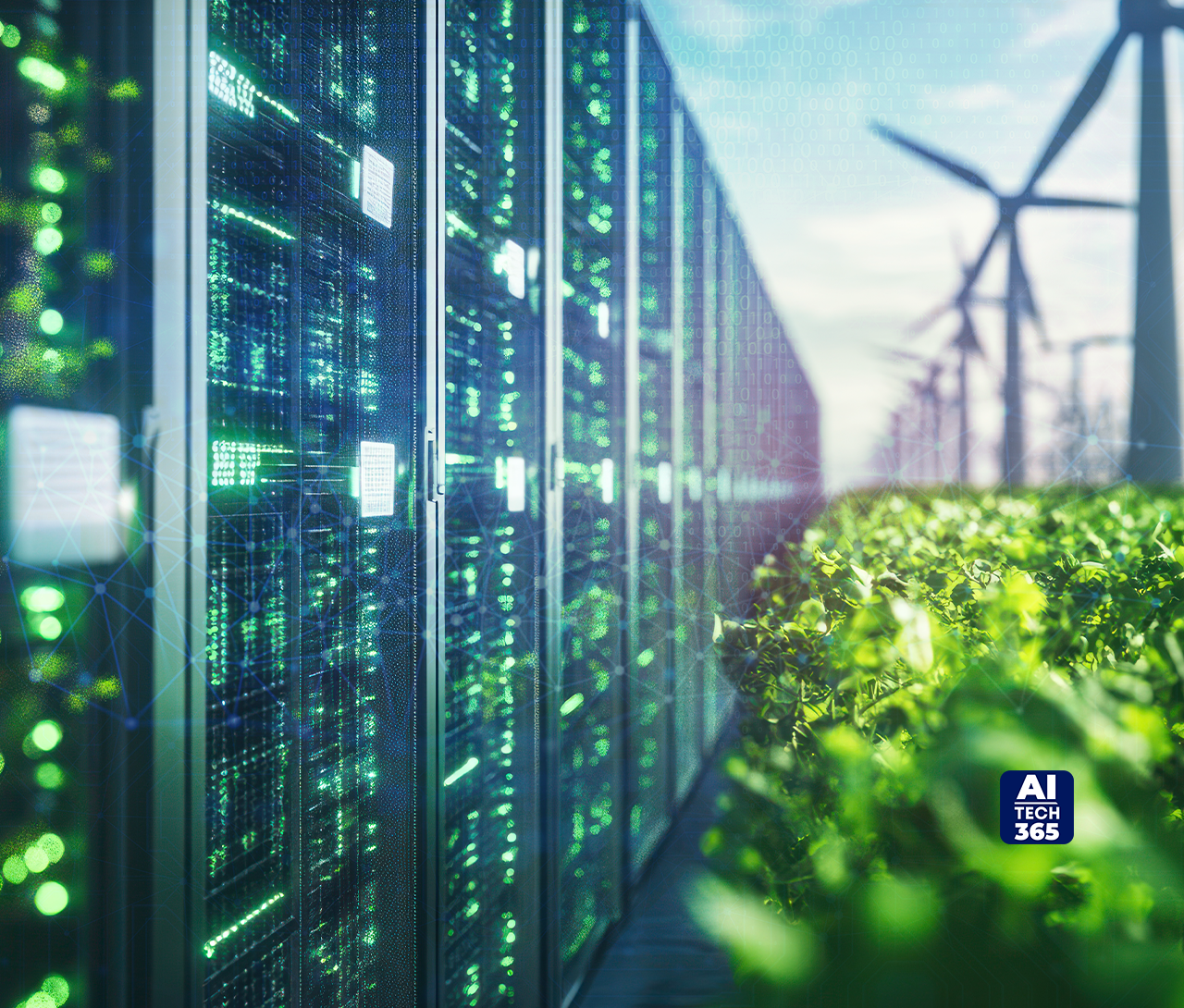
Building larger AI data centers is no longer the hardest part. Finding enough electricity to power them has become the bigger challenge. In many regions, multi-gigawatt projects face four to eight years of waiting for grid interconnections and transmission upgrades. That is an eternity for an industry moving at AI speed. As a result, infrastructure planning is shifting from building wherever land is available to building wherever reliable power already exists.
This is driving the rise of distributed, modular micro data centers. Instead of leaning only on massive centralized campuses, organizations are exploring smaller facilities placed near, on site solar arrays, wind farms, hydroelectric resources, and even future modular nuclear reactors. The goal is kind of practical rather than some ideological thing. Generating, or sourcing power locally reduces how much you depend on jammed grids, it also shortens the deployment timeline, and boosts day to day operational resilience.
The strategy is already becoming part of enterprise infrastructure planning. Oracle said that new AI data centers are getting built, with on-site power generation or via direct investment into grid upgrades that are needed to support it all. The company also pointed out, that fuel cells are a reasonable option for handling the growing power needs of AI data centers, and at the same time improving operational resilience. That reflects a wider industry shift where energy infrastructure is becoming as important as servers and networking.
This changes how enterprises should evaluate future AI investments. The next generation of infrastructure will not be defined only by compute capacity. It will also be defined by where organizations can secure dependable power quickly enough to keep AI deployment on schedule.
How Compute Scarcity Will Redefine Corporate Competition
The AI race is slowly turning into an energy race. As AI data center power becomes harder to secure, access to electricity will increasingly determine who can scale AI and who cannot. That creates a new divide between Compute Haves and Compute Have-Nots. The difference will not be technical talent or software capability. It will be long-term access to reliable power.
Large hyperscalers are already in a stronger position, because many have grabbed long-term Power Purchase Agreements (PPAs) and put money into dedicated energy infrastructure. That basically gives them more certainty about future compute capacity while also lowering the risk tied to power shortages, and those volatile electricity prices too. Mid-market enterprises though, they do not get the same edge. Most rely on shared cloud infrastructure, so when energy costs rise it can quickly show up as higher cloud bills, slower deployment timelines, or just reduced access to premium AI resources, especially during peak demand windows.
The figures make it pretty clear why this shift matters. Deloitte projects that data center power demand across the United States will climb from 47 GW in 2025 up to more than 176 GW by 2035. As demand ramps faster than new grid capacity can actually be added, electricity becomes a competitive resource rather than some ‘background utility.’ Every new AI rollout ends up competing for that same limited supply, so it’s not really just growth, it’s a constraint.
That is why power is becoming an architectural moat. Enterprises that treat their energy strategy as part and parcel of their AI strategy will end up having more flexibility to train those models, roll out AI applications, and keep operating costs under control. Yet, if some wait until capacity gets tight, they may discover that the biggest bottleneck to scaling AI is no longer the compute side of things. It’s actually the electricity that’s needed to power it, not just the chips.
The Enterprise AI Power Playbook for 2028
The next phase of AI will not be won by the companies with the largest GPU clusters. It will belong to those that understand energy as a strategic asset instead of an operational expense. The shift from hardware constraints to AI data center power constraints is already underway, and leading technology companies are adapting before the rest of the market catches up. Google’s announcement that it has signed 1 GW of data center demand response with utility partners shows that managing energy has become part of scaling AI, not a separate sustainability initiative.
Enterprise leaders should start preparing now instead of waiting for compute shortages to become a business problem.
- Implement software-level power capping to improve workload efficiency without sacrificing critical AI performance.
- Diversify cloud providers across regions with different energy mixes and grid capacity to reduce future supply risks.
- Audit the energy efficiency of AI fine-tuning workloads so every additional model delivers measurable business value rather than unnecessary power consumption.
By 2028, competitive advantage is going to depend less on who owns the most compute and more on who can keep that compute powered, consistently, even when the whole environment gets a little messy.