

Humanoid robots have become the manufacturing world’s favorite headline. Every week seems to bring another demo, another pilot announcement, or another prediction about factories filled with robots working alongside humans. The excitement is understandable. Yet factory operators do not run production lines on excitement. They run them on uptime, safety, consistency, and economics.
That distinction matters. A humanoid manufacturing pilot is not about proving that a robot can walk across a factory floor. It is about proving that it can create measurable business value in a real production environment. At the center of this shift is Physical AI, which refers to AI embedded in a machine such as a robot that can connect to other technologies and data sources and learn from human training within its physical limits.
The conversation around humanoid robots in manufacturing is slowly moving away from science fiction and toward operations management. The companies making progress are not placing giant bets. Instead, they are following a disciplined framework. They start with the right tasks, manage risk through smart economics, train robots in virtual environments, and scale only when the numbers justify it.
Phase 1: Strategic Task Selection and Safety Certification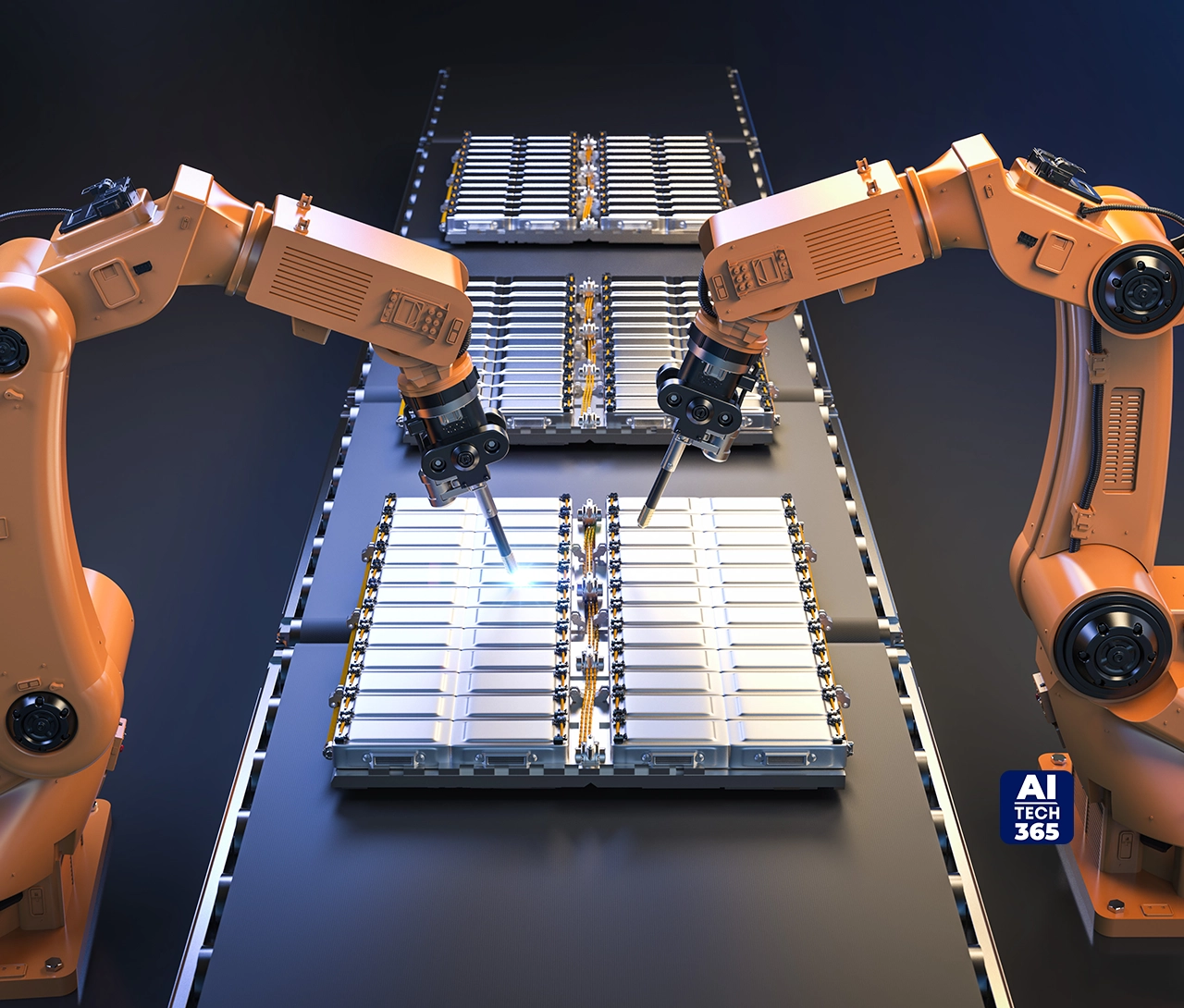
Many pilot programs fail before they even begin because companies choose the wrong first task.
The temptation is to test a humanoid robot on something impressive. That usually means tasks that require complex decision-making, frequent exceptions, or significant environmental variability. Those projects often create more problems than insights. A smarter approach starts with the opposite mindset.
The best first tasks sit at the intersection of repetition, physical strain, and operational consistency. These are jobs that humans can do well but would rather not perform for eight or ten hours every day. Material handling, repetitive component positioning, machine tending, and part transfer activities often fall into this category.
A useful way to think about task selection is through a monotonous versus dynamic matrix. Monotonous tasks involve predictable movements, stable environments, and limited variation. Dynamic tasks involve changing conditions, multiple decision points, and irregular workflows. For a pilot, the sweet spot is almost always on the monotonous side.
A real world example makes it pretty clear. At BMWs Spartanburg facility, Figure 02 inserted sheet metal parts into fixtures, in a production environment, like daily operations. The goal wasn’t really to show off intelligence or anything, more like to see what happens in practice. In other words, the aim was to test whether a humanoid could safely do ergonomically demanding, repetitive work while keeping millimeter level placement accuracy, without slipping. That is exactly the sort of use case that gives manufacturers actually meaningful data, not just hype.
Safety has to move along with task selection from day one too, otherwise it kind of collapses. A pilot cannot succeed if safety is treated as a checkbox game after deployment. Manufacturers need to evaluate collision risks and the workspace boundaries, the emergency stop procedures, and also the human robot interaction points, before the robot ever enters production.
This is where established ISO standards for collaborative robotics become critical. The objective is not to replace existing safety frameworks. It is to integrate humanoid robots into them. Human-robot coexistence works best when workers understand where the robot operates, what it can do, and how it responds under abnormal conditions. Trust grows when behavior becomes predictable.
The biggest mistake is assuming that a humanoid robot should immediately act like a human worker. The smartest pilots begin with tasks that demand consistency, not creativity.
Phase 2: The Economics of RaaS Versus Direct Purchase
Technology often gets the spotlight, but economics usually decides if a pilot survives.
Lots of manufacturers are keen on humanoid robots in manufacturing, though there’s still a lot of uncertainty hanging around. More than six in ten organizations are still not sure about the ROI, for humanoid robots. At the same time, 63% mention high cost as a sticking point, while 58% bring up training challenges, that can get messy.
This should not be treated as a full stop or a red flag either. More like a gentle reminder that pilots are meant to reduce that exact uncertainty.
And this is where Robot-as-a-Service, or RaaS, starts showing up in the conversation. With regular robot buying, companies need a big capital outlay. They have to purchase the hardware, integrate the whole system, keep everything maintained, and then take on the risk if the results don’t land the way they expected.
RaaS changes the equation.
Instead of making a large upfront investment, manufacturers pay an operational expense that is tied to usage. Software updates are generally included. Hardware maintenance is typically handled by the provider. AI models continue to improve without requiring entirely new purchases. Most importantly, the organization can sort of gauge actual world performance before jumping into a wider rollout.
For early-stage humanoid manufacturing pilots, that flexibility matters more than full ownership, you know.
Direct purchase still fits somewhere in the picture. Once a pilot shows stable performance, dependable maintenance costs, and measurable productivity gains, ownership can deliver stronger long-term returns. Still, that call should land after validation, not before it.
A bunch of automation projects end up stumbling because companies purchase the tech first, and then search for value later. The better sequence is simple. Validate the business case. Prove operational fit. Then scale investment.
Humanoid robots in manufacturing are no different.
Also Read: Human-in-the-Loop vs Fully Autonomous AI: Where Should You Draw the Line?
Phase 3: Accelerating Deployment Through Digital-Twin Training
One of the biggest fears surrounding automation projects is disruption.
Production managers do not want experimentation interfering with output targets. Operations teams do not want new systems creating unexpected bottlenecks. Workers do not want constant changes to established workflows.
Digital twins solve much of this challenge.
In simple terms, a digital twin is a virtual replica of the factory environment. It recreates machines, workflows, layouts, and operational conditions inside a simulation. This allows manufacturers to test scenarios, train AI systems, and identify problems before physical deployment begins.
The advantage is obvious. Instead of learning exclusively on the factory floor, robots can learn in a virtual environment where mistakes carry no production cost.
This approach becomes even more valuable when dealing with humanoid robots. Unlike traditional industrial robots that operate inside fixed work cells, humanoids are designed to move through broader environments and interact with a wider range of equipment. That complexity increases the value of simulation.
The strongest evidence comes from practice rather than theory. BMW is scaling digital-twin applications across more than 30 production sites through its Virtual Factory initiative. That scale sends a clear signal. Digital twins are no longer experimental technology. They are becoming part of the operational toolkit for modern manufacturing.
Beyond simulation, deployment success also depends on integration. Robots cannot operate as isolated systems. They need access to production data, workflow information, and factory software environments.
That is why standardized IT ecosystems and API-based architectures matter. They reduce integration friction and allow robots to become part of the broader smart manufacturing ecosystem rather than standalone machines.
The lesson is straightforward. The fastest deployment strategy is not training a robot on the factory floor. It is training the robot before it ever arrives there.
Phase 4: Metrics That Determine When to Scale
A successful pilot should answer one question.
Should the company deploy one robot or one hundred?
The answer cannot come from enthusiasm. It must come from metrics.
Cycle time consistency is one of the first indicators to monitor. A robot that performs quickly one day and inconsistently the next creates operational uncertainty. Consistency matters more than peak performance.
Mean Time Between Failures, or MTBF, provides another critical signal. If a humanoid requires constant intervention, maintenance, or resets, scaling simply multiplies the problem. Reliability must improve before expansion occurs.
Placement accuracy is just as important, kind of like people don’t realize, because in manufacturing environments even small deviations can lead to quality problems, rework bills, or downstream production disruptions. A pilot should show repeatable precision under ordinary operating conditions, without any odd surprises.
Employee acceptance rates are often brushed aside, but they can become the deciding factor in practice. Workers are dealing with these systems every day. If employees see the robot as erratic, disruptive, or even unsafe, scaling gets a lot harder, no matter how good the technical performance is.
The best pilot programs, combine operational measurements with financial results, not just one side of the story. They measure labor efficiency, downtime reduction, throughput improvements, and quality performance alongside technical indicators.
Only then can leaders build a credible business case.
A fleet rollout should never be driven by what the technology can do. It should be driven by what the data proves.
Future-Proofing the Factory Without Chasing the Hype
The conversation around humanoid robots in manufacturing is entering a more mature phase. The winners will not be the companies making the loudest announcements. They will be the companies running the most disciplined experiments.
The path forward is becoming clearer. Start with repetitive and physically demanding tasks. Use RaaS to reduce financial exposure. Train in digital environments before touching production lines. Scale only when operational metrics support the decision.
That approach matters because adoption is accelerating. In fact, 22% of manufacturers plan to use Physical AI within the next two years, up from 9% today. The signal is hard to ignore.
Factories do not become more competitive by waiting for perfect technology. They become more competitive by testing promising technology with discipline. Humanoid robots may still be early in their journey, but the framework for evaluating them is already here. The manufacturers that learn now will have a very different advantage when the technology reaches scale.