

For the last few years, the AI conversation has been trapped behind screens. The spotlight stayed fixed on chatbots, image generators, and digital assistants. Yet the bigger shift is happening somewhere far less glamorous and far more consequential. It is happening on factory floors.
Manufacturing leaders aren’t really asking anymore how AI can generate content. It’s more like they’re asking, how AI can push materials around, navigate complicated spaces, adapt when conditions change, and still operate safely next to people. And yeah that change is sort of what’s creating physical AI in manufacturing, basically a setup that blends AI perception, multimodal reasoning, and robotics so it can actually do tasks in the real world.
While plenty of the industry is still debating what might be possible, BMW and Schaeffler already moved into deployment. Their efforts give this rare look at what happens after physical AI leaves the lab and ends up inside production. Most importantly, they point to a reality that feels a lot more grounded than the humanoid robot hype taking up headlines. The main story isn’t about swapping out whole factories, not even close. It is about task scoping, digital twins, enterprise integration, and operational discipline.
What Can Humanoids Actually Do on the Line?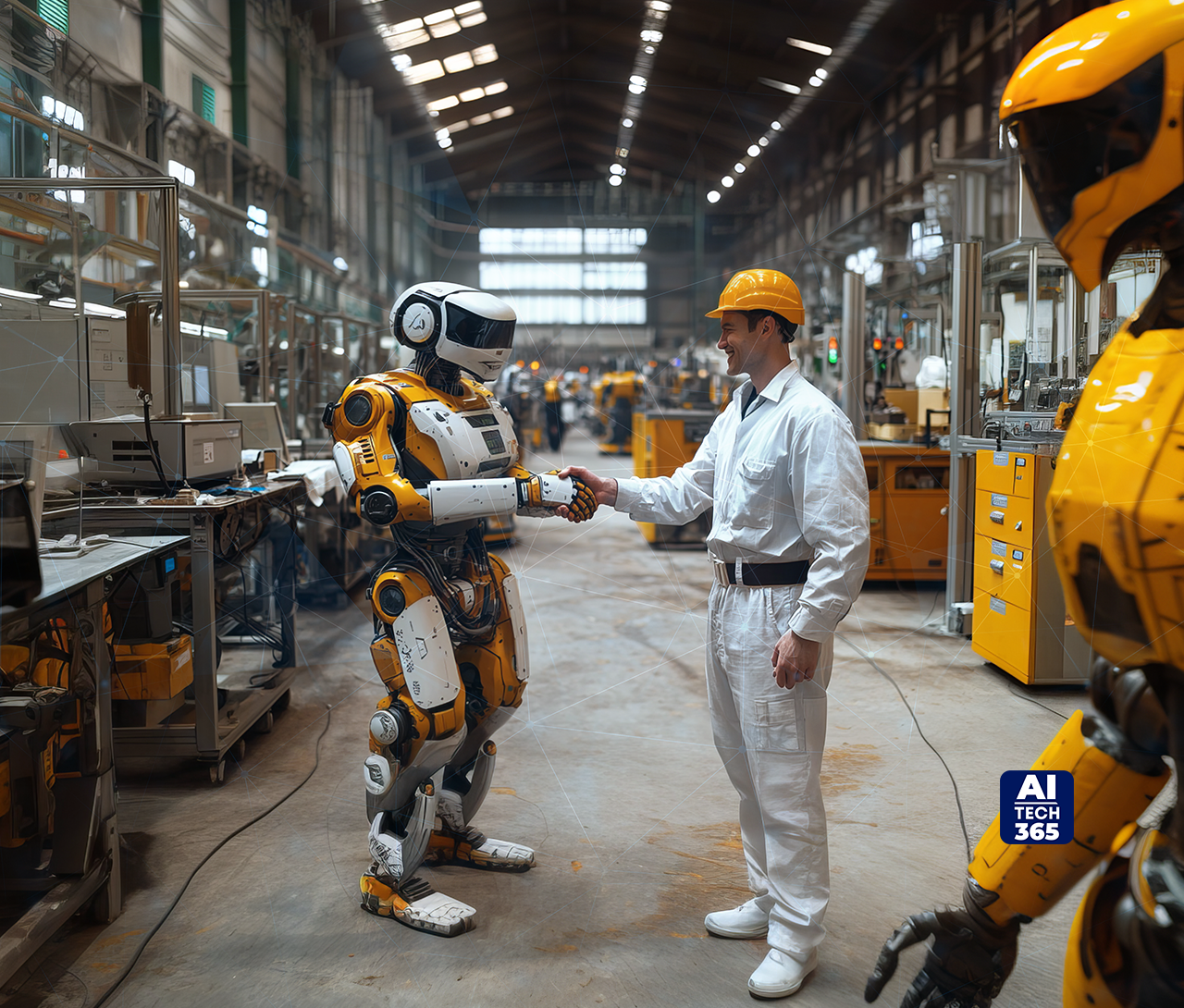
One of the biggest misconceptions that pops up around physical AI in manufacturing is the idea that humanoid robots are somehow arriving to take over whole production lines. I mean, it sounds dramatic, and maybe a little sci-fi, but the truth is way less intense and honestly more practical.
Manufacturers are finding that success mostly comes from spotting the exact problems first, instead of chasing bigger ambitions that look good on paper. So really it’s not about whether a robot can do, everything a person can do. It’s more like, can it consistently handle a tight set of valuable tasks, in the middle of a real production environment.
That distinction matters because factories already contain thousands of highly optimized machines. Traditional industrial robots excel at repetitive and predictable activities. However, they struggle when environments become dynamic or when tasks require flexibility.
BMW’s deployment strategy reflects this practical mindset. Rather than positioning humanoids as universal workers, the company has assigned targeted responsibilities. Its AEON humanoid robot handles repetitive activities, delivers materials to production lines, navigates around obstacles, and supports workers on the shop floor. The robot can also be equipped with gripping tools, scanning devices, and other task-specific capabilities.
This approach highlights where physical AI in manufacturing creates value. Material handling, logistics support, and semi-structured workflows often sit in an uncomfortable middle ground. They are too variable for traditional automation, yet too repetitive to justify constant human attention. As a result, these tasks become ideal candidates for intelligent robotics.
What makes this shift important is that it reframes automation itself. The goal is not to automate entire jobs. The goal is to automate specific activities within jobs. Consequently, companies can improve productivity while preserving human oversight, judgment, and adaptability.
That is a far more realistic path to adoption than the all-or-nothing vision often promoted by the broader robotics industry.
Also Read: The AI Playbook for Piloting Humanoid Robots Without Betting the Factory
Virtualizing Reality Through Digital Twins and Synthetic Training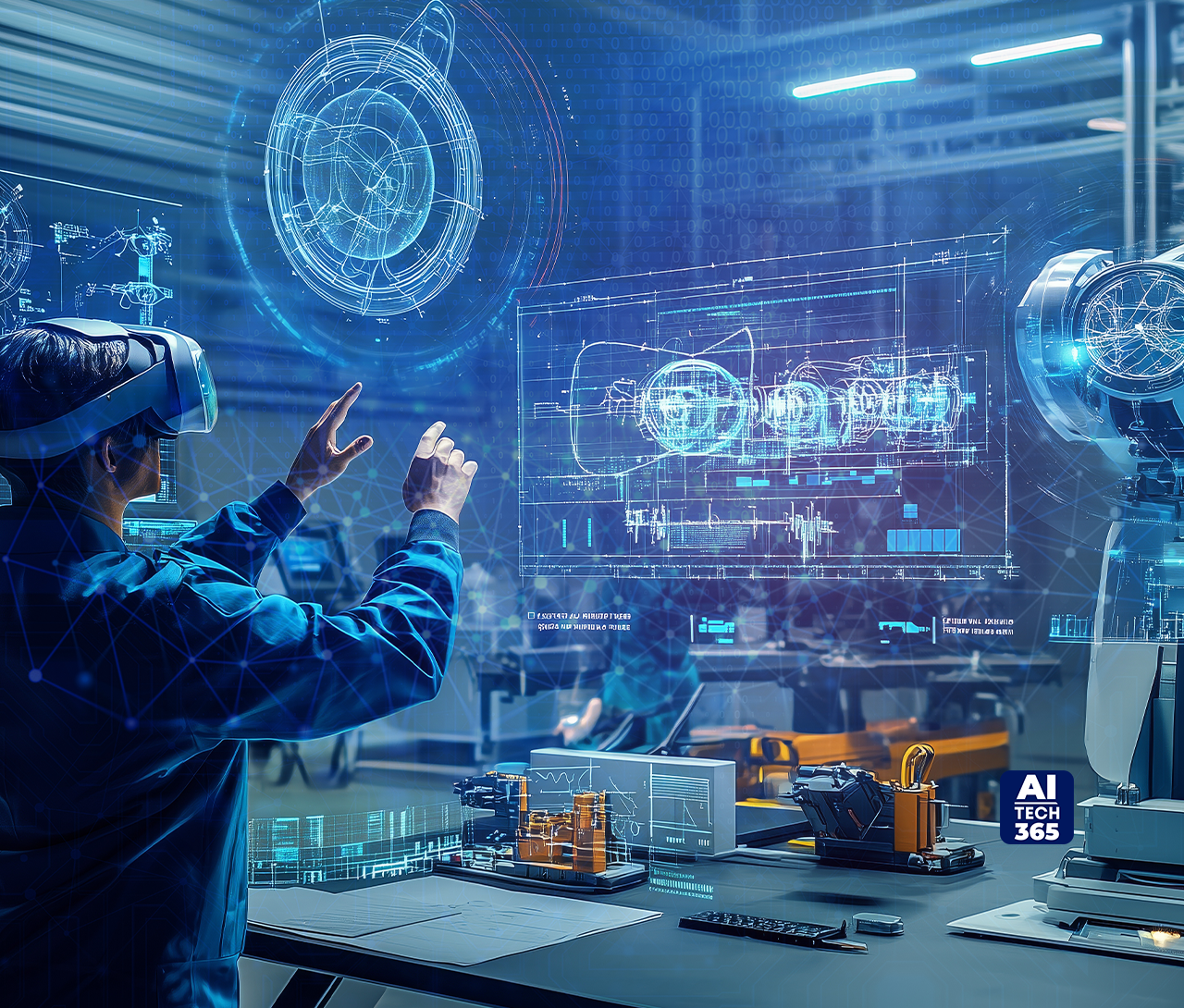
Every manufacturing executive understands a simple truth. Mistakes on a live production line are expensive.
A software bug can interrupt output. A robotic failure can damage equipment. A poorly trained autonomous system can create safety risks that ripple across operations. Therefore, companies deploying physical AI in manufacturing need a way to train and test systems before they ever interact with real production assets.
This is where digital twins become critical.
A digital twin is a virtual representation of a physical environment. Instead of learning directly on the factory floor, robots can train inside simulated environments that replicate real-world conditions. These simulations allow thousands of operational cycles to be tested without disrupting production.
Schaeffler provides one of the clearest examples of this strategy. The company trains humanoid robots within a digital twin environment powered by NVIDIA Omniverse. Using physics-based simulation and AI-driven training, robots learn tasks such as flexible product kitting before those capabilities are transferred into physical systems.
The significance of this process goes beyond efficiency. It fundamentally changes how industrial robotics evolves. Historically, programming robots required engineers to define every movement and every rule. Physical AI introduces a different model. Systems learn through repeated interaction with simulated environments, allowing them to adapt to changing conditions rather than simply follow predefined instructions.
Yet training inside a virtual environment creates another challenge. The simulated world is always cleaner than reality.
Factory floors contain unpredictable variables. Lighting conditions change. Workers move through shared spaces. Equipment ages. Dust accumulates. Materials vary. These factors create what engineers often describe as the sim-to-real gap
Closing that gap is one of the defining challenges of industrial AI.
Schaeffler addresses this issue by translating actual factory tasks, including box unloading and specialized pick-and-place operations, into simulation environments. Even more importantly, operational data collected from the shop floor continuously feeds back into the training process. This creates an ongoing learning loop between virtual and physical environments.
The result is a more resilient deployment model. Rather than assuming perfection from day one, manufacturers can continuously refine robotic behavior as new scenarios emerge.
That process may not generate headlines. However, it is precisely the type of operational discipline that separates successful deployments from expensive experiments.
The Integration Bottleneck Between Physical AI and Enterprise Systems
The robotics industry often presents hardware as the main challenge. In reality, hardware is only part of the equation.
A robot can possess advanced perception, mobility, and reasoning capabilities. Yet if it cannot connect to enterprise systems, it becomes little more than an expensive machine operating in isolation.
This is why integration remains one of the most underestimated aspects of physical AI in manufacturing.
Factories already operate through a dense network of operational technology and information technology systems. Manufacturing Execution Systems track production activity. Enterprise Resource Planning platforms manage resources and workflows. Industrial controllers coordinate equipment behavior. Quality management systems monitor performance standards.
Any intelligent robot entering this environment must communicate with those systems reliably and securely.
BMW’s approach highlights this reality. The company states that production AI depends on a unified IT and data model that consolidates data silos into a shared platform. Its broader production environment already incorporates digital twins, AI-enabled quality controls, and autonomous transport systems.
That statement may sound technical, but its implications are enormous.
Many organizations approach AI as a standalone technology initiative. They purchase new software, run pilot projects, and expect transformation to follow. Yet transformation rarely occurs when data remains fragmented across disconnected systems.
Physical AI succeeds only when robots become part of a larger operational ecosystem.
This is where another critical distinction emerges. AI systems often operate probabilistically. They assess situations, interpret information, and make decisions based on likelihoods. Manufacturing systems, however, demand deterministic outcomes. Equipment must behave within clearly defined safety boundaries. Production processes must remain predictable and auditable.
Consequently, successful deployments require a careful balance. AI can introduce flexibility and adaptability. At the same time, execution must remain constrained by industrial-grade controls and safety standards.
Many organizations focus on the intelligence of robots. BMW’s example suggests a different lesson. The intelligence matters. Yet the infrastructure connecting that intelligence to production may matter even more.
Without integration, physical AI remains a demonstration. With integration, it becomes a production asset.
What Early Deployment Data Actually Reveals?
The conversation around humanoid robotics often swings between two extremes. Some predict mass workforce displacement. Others dismiss the technology as little more than an expensive publicity exercise.
Neither perspective is particularly useful.
The more important question is whether these systems can consistently create value inside production environments.
BMW’s earlier deployment experience provides one of the strongest publicly available indicators. During a ten-month pilot, Figure 02 contributed to production associated with more than 30,000 BMW X3 vehicles. The system moved more than 90,000 components, accumulated roughly 1,250 operating hours, and logged approximately 1.2 million steps.
Those numbers do not tell us everything. They do not reveal full total cost of ownership. They do not disclose battery degradation data. They do not provide mean time between failures.
However, they do reveal something equally important.
The conversation has moved beyond proof of concept.
Robots are no longer performing isolated demonstrations for cameras. They are executing repetitive operational activities inside manufacturing environments over extended periods. That distinction matters because industrial adoption is rarely driven by breakthrough moments. It is driven by consistency.
Equally important, these deployments point toward workforce evolution rather than workforce elimination. Factories continue to require human judgment, process expertise, quality oversight, and problem-solving capabilities. Physical AI simply shifts where human effort is applied.
The organizations that benefit most will not be those that remove people from operations. They will be those that allow people and intelligent systems to focus on what each does best.
The Real Competitive Advantage Behind Physical AI
The most interesting lesson from BMW and Schaeffler is not that humanoid robots are becoming more capable. Most industry observers already understand that.
The more important lesson is that successful physical AI in manufacturing looks surprisingly unglamorous. It depends on disciplined task selection, rigorous simulation, strong data architecture, and careful integration into existing operations. Like, in other words, the competitive advantage comes from execution more than experimentation.
A lot of companies still see physical AI as sort of future technology. BMW and Schaeffler are treating it more like industrial infrastructure, instead. That small mindset shift might decide who actually leads the next phase in manufacturing. The winners probably won’t be the orgs with the smartest algorithms. They’ll be the ones that can reliably stitch intelligence to the physical world, scale it across operations, and convert technological promise into measurable production results.