

Everyone is busy tracking GPU shipments and stock charts. Fair enough. But that’s not where the real story sits.
The real shift is quieter and far more dangerous. Nvidia has moved from selling chips to controlling the environment where AI gets built, trained, and deployed. That’s not a product upgrade. That’s a power shift.
The numbers make this impossible to ignore. Nvidia reported $215.9 billion full-year revenue for fiscal 2026, up 65% year over year. That’s not growth. That’s acceleration at infrastructure scale.
So the Nvidia AI strategy is not about faster GPUs. It is about owning three layers at once. Compute density that no one matches. Software lock-in that no one escapes. And cloud-native services that keep you inside the system.
Put simply, Nvidia is not competing in AI. It is defining how AI gets done.
The Software Moat and the Cost of Leaving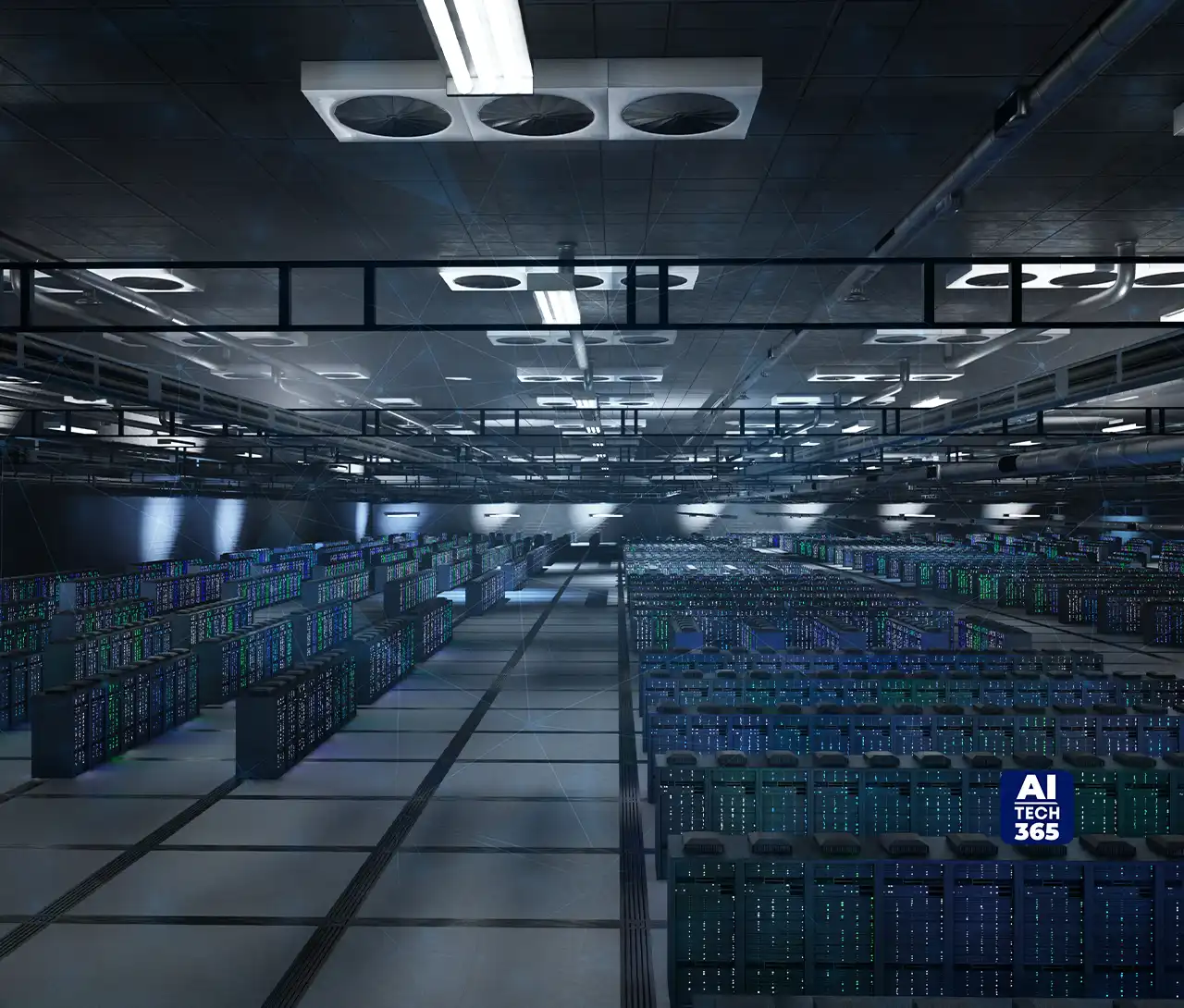
Most people think Nvidia wins because of hardware. That’s the surface-level take. The real lock-in sits elsewhere.
CUDA.
CUDA looks like a toolkit. It behaves like a tax.
Over two decades, Nvidia has quietly built a world where developers don’t just use CUDA. They grow up inside it. Nvidia says CUDA is now at 20 years with 6 million developers. That number is not about scale. It is about dependency.
Because here’s what happens in practice. A developer builds on CUDA. Then they use cuDNN for deep learning. Then TensorRT for inference. Then they optimize performance around Nvidia-specific instructions. At that point, switching is no longer a technical decision. It becomes a business risk.
And this is where the Nvidia AI strategy gets uncomfortable.
Developers are not actively choosing Nvidia anymore. They are inheriting it. Teams hire people who already know CUDA. Companies build systems that assume CUDA compatibility. Over time, the ecosystem reinforces itself.
Competitors like AMD or Intel are not just offering alternative chips. They are asking companies to rewrite their past.
That is a very expensive ask.
So the moat is not just performance. It is familiarity. It is inertia. It is the accumulated cost of switching.
And history backs this pattern. Microsoft did it with Windows. Apple did it with iOS. Once developers lock in, the platform wins.
The lesson is simple and slightly brutal. Proprietary software layers outlive hardware advantages. Chips can be matched. Ecosystems are much harder to displace.
The Ecosystem Flywheel from Chips to AI Factories
Selling chips is a transaction. Selling infrastructure is a relationship.
Nvidia understood this early and started expanding outward. First came GPUs. Then DGX systems. Then networking. Then software. And now, entire AI environments.
This is where the Nvidia AI strategy shifts gears.
The company is no longer selling components. It is selling the factory.
Think about what happens when you scale AI. Training models across thousands of GPUs sounds impressive. But the real challenge is coordination. Data movement, latency, synchronization, bandwidth. That’s where most systems break.
Nvidia stepped into that gap.
Through its networking stack, especially after Mellanox, it started controlling how GPUs talk to each other. And that’s not a small detail. That’s the difference between a cluster that works and one that collapses under load.
Nvidia says Spectrum-X Ethernet Photonics improves power efficiency and uptime by 5x and is built to scale to millions of GPUs across multi-site AI factories. That’s not a feature upgrade. That’s infrastructure control at scale.
Now zoom out.
You have GPUs for compute. DGX for systems. Spectrum-X for networking. CUDA for software. And orchestration layered on top. This is not a product suite. It is a vertically integrated stack.
This is exactly how Amazon Web Services built its dominance. Not by selling servers, but by abstracting complexity.
Nvidia is doing the same, just for AI.
So when enterprises buy into Nvidia, they are not buying hardware. They are buying a pre-assembled operating environment.
And once that environment is in place, the flywheel kicks in. More usage leads to more optimization. More optimization leads to better performance. Better performance attracts more developers.
At that point, the system feeds itself.
Also Read: Build vs. Buy vs. Partner: The AI Strategy Decision That Will Define Enterprise Competitiveness
The New Frontier with NIMs and Agentic AI
Training models built the hype. Inference will build the business.
That shift is already underway. And Nvidia is not waiting to react. It is positioning itself right at the center.
Enter NIMs.
Nvidia’s Inference Microservices are not just another product layer. They are a strategic move into deployment. Nvidia says NIM enables deployment of models in five minutes using standard APIs and enterprise-grade containers.
Pause there.
Five minutes.
That is not just convenience. That is control over the last mile of AI.
Because once models are trained, companies need to run them in production. Across apps, workflows, and user interactions. That’s where latency, cost, and scalability matter more than raw compute.
And this is where the Nvidia AI strategy evolves again.
Instead of only powering training, Nvidia now wants to sit inside inference. It wants to be present every time a model runs, not just when it is created.
The logic is clean.
Training is capital heavy and centralized. Inference is operational and distributed. It touches every user, every request, every transaction.
So Nvidia is shifting from selling engines to collecting tolls on usage.
Now layer in agentic AI.
With NIMs, NeMo, and prebuilt blueprints, Nvidia is not just helping companies deploy models. It is helping them deploy systems that act, decide, and automate workflows.
This is where things get interesting.
Because once AI moves from static models to active agents, the need for orchestration increases. And Nvidia already owns the infrastructure layer that supports it.
That is not accidental.
It is a continuation of the same playbook. Own the environment. Expand into the next bottleneck. Stay relevant at every stage of the stack.
Strategic Lessons for Enterprise Leaders
Most enterprise leaders will read this and think it is a Nvidia story. It is not. It is a playbook.
And it comes with a few uncomfortable lessons.
1. Vertical integration is not always optional
There is a long-standing debate between building full-stack systems and staying modular. Nvidia picked a side.
It went full stack.
Compute, networking, software, deployment. Everything tightly coupled. That decision allowed it to optimize across layers and remove friction for customers.
The takeaway is not that everyone should copy this. The takeaway is knowing when integration creates leverage.
If your industry has tight dependencies between layers, modularity can slow you down.
2. Own the bottleneck, not just the product
Most companies focus on improving their core offering. Nvidia looked at where systems break.
Networking.
Coordination.
Orchestration.
That is where it invested.
Nvidia defines an AI factory as infrastructure managing the full AI lifecycle, where intelligence is measured by token throughput as the product. That definition shifts the focus completely.
It is no longer about building models. It is about producing output at scale.
So the real question for any business is simple. Where does your system slow down? That is where your opportunity sits.
3. Ecosystem beats product every time
Products can be compared. Ecosystems are experienced.
Nvidia built a developer base that effectively markets the platform for free. Every tutorial, every open-source project, every enterprise deployment adds to the network.
And once that network reaches critical mass, it becomes self-sustaining.
Here is the harsh truth.
If your product can be replaced in a quarter, you do not have a business. You have inventory.
Ecosystems change that equation. They make switching painful. They turn customers into participants.
That is where long-term advantage lives.
The Rise of Sovereign AI
The next phase is already visible.
Countries are not just experimenting with AI. They are building their own infrastructure. Their own data pipelines. Their own compute clusters.
Sovereign AI is not a buzzword. It is a strategic necessity.
And this is where Nvidia stands to gain again.
Because when nations build AI stacks, they need trusted, scalable infrastructure. They need systems that work at scale without constant reinvention.
That plays directly into Nvidia’s strengths.
But there is a flip side.
High-density compute comes with real costs. Energy consumption, hardware supply chains, and environmental impact are not side issues anymore. They are central to the conversation.
So the real question is not whether Nvidia will continue to lead.
It is whether the world can sustain the infrastructure model it is building.
Because Nvidia did not just win the AI race.
It built the ground everyone else is now running on.