

‘Your call is important to us.’ Few sentences have become more irritating in customer service. The problem with legacy IVR systems is that they force customers to think like the company’s phone tree. Press one. Choose an option. Repeat the same information. Then wait for a human.
Voice AI is changing the whole equation. The customer can just speak naturally, pivot mid-thought, explain the issue in a messy way, or ask a follow-up without getting pushed back into some menu. It’s not that distant promise anymore. At Home Depot they are already using AI voice agents that can figure out why someone is calling in under 10 seconds, help wrap up a purchase or kick off a service request, and then route to a human when it’s needed. Google Cloud also claims customers can get to answers up to four times faster than the older phone maze options.
The bigger story is not faster calls. It is a redesign of frontline work around intent, latency, escalation and economics.
The Architecture of a Conversation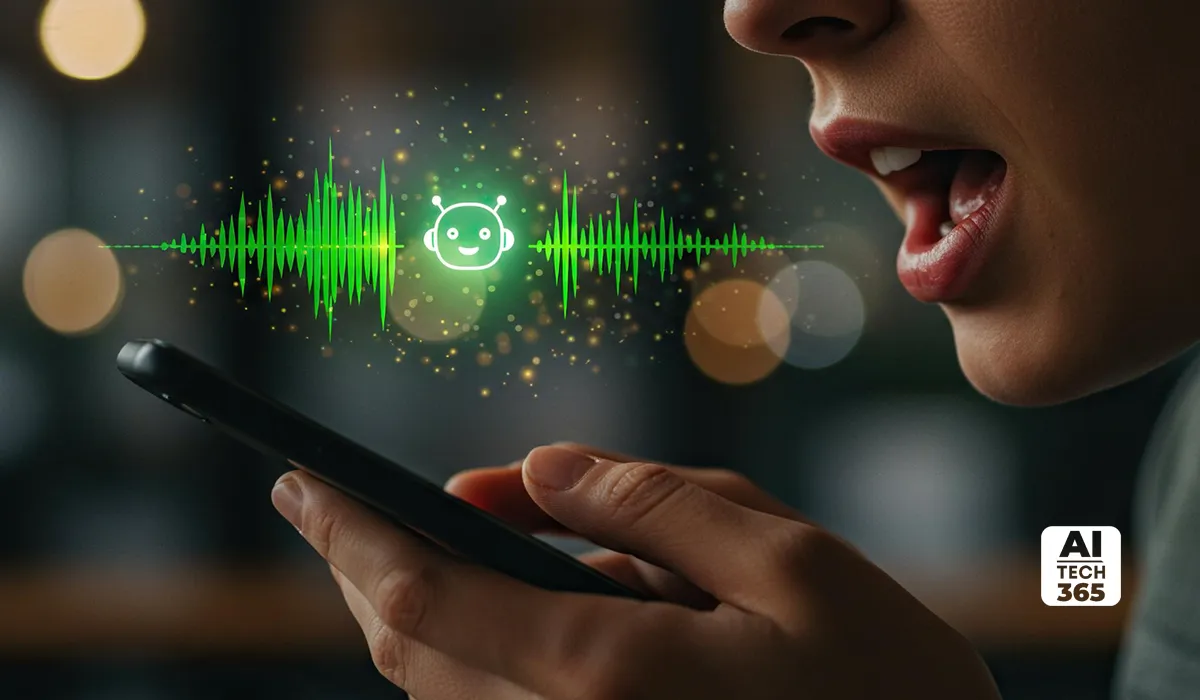
Traditional IVR systems are built around certainty. The company predicts what customers might ask, converts those possibilities into menus, and routes each response down a predefined branch. That works when the customer behaves exactly as expected. Real customers rarely do.
Microsoft’s June 2026 explanation of Dynamics 365 Contact Center points to the weakness directly. Traditional IVRs depend on deterministic pipelines and predefined dialogue paths. They can handle simple, predictable interactions, but interruptions, topic changes and multiple intents quickly expose their limits. As the tree expands, it also becomes harder and more expensive to maintain.
Voice AI changes the basic question. Instead of asking, ‘Which button did the customer press?’ the system asks, ‘What is this person actually trying to do?’
A customer might say, ‘I was charged twice, and I also need to change the delivery address.’ A rigid IVR sees several possible routes. A voice AI agent can interpret the broader intent, separate the issues and decide what needs to happen next.
That is where semantic understanding matters. The system is not relying only on keywords. It is using context to interpret meaning across a messy conversation. The interaction feels less like navigating software and more like explaining a problem to someone who understands the point.
Enterprise Voice AI does not mean throwing away every rule. Microsoft’s newer approach combines structured voice processing with generative reasoning. Controlled workflows still matter where precision is critical. Generative AI adds flexibility where customers stop following the script.
That hybrid model is likely to matter more than the hype around fully autonomous agents. Enterprises do not need a system that sounds clever. They need one that knows when to reason, when to follow a rule and when to stop.
Also Read: Native Multimodal Models vs. Bolt-On Pipelines: Which Delivers Better Real-Time Performance?
The Millisecond Battleground
A voice conversation has a brutal constraint that text-based AI can hide. Silence feels longer when someone is waiting on the phone.
The technical pipeline looks straightforward on paper. Speech-to-text captures the caller’s words. An LLM processes the request. Text-to-speech turns the response back into audio. Every stage adds delay. The system must also decide when the person has finished speaking before answering.
That last problem is easy to underestimate.
If a customer pauses to breathe and the AI jumps in, the system sounds impatient. If it waits too long, the customer assumes something has broken. AWS addresses this through streaming ASR and turn detection that evaluates speech as it arrives and predicts when the caller has actually finished speaking.
Its natural-conversation example uses a 0.7 confidence threshold and a 640 millisecond timeout. Sensitive inputs such as OTPs can use longer timeouts because accuracy matters more than conversational speed.
AWS also recommends less than 500 milliseconds of end-to-end latency for good call quality. When network and telephony latency moves above 900 milliseconds, AWS says the delay can become significant enough to disrupt the interaction.
These numbers reveal an important point. Voice AI latency is a systems problem, not just an LLM problem.
Streaming generation can start producing an answer before the entire response is complete. Faster speech recognition reduces the time before reasoning begins. Efficient text-to-speech shortens the final step. Edge computing can reduce the distance data travels. Predictive endpointing reduces the dead time between the customer finishing a sentence and the system responding.
The goal is to make the whole conversation feel immediate.
That is why latency becomes a product feature. Customers do not care whether the delay came from the model, the speech recognizer or the network. They only know that the machine hesitated.
Designing the Safety Net
The idea of zero handoff sounds impressive in a product demo. In a real contact center, it can become a dangerous obsession.
Some calls should reach a human. A customer dealing with a sensitive billing dispute, a failed service, an unusual exception or a situation involving trust may need judgment rather than another automated answer. The objective is not to eliminate humans. It is to eliminate unnecessary human involvement while making the necessary handoff much better.
McKinsey’s June 2026 analysis of AI voice agents makes this distinction particularly important. Voice agents are increasingly able to resolve inquiries end to end, access knowledge bases in real time, guide complex journeys and summarize interactions for human agents. Yet enterprise-scale deployment still depends on handling ambiguity, context, error recovery and escalation properly.
A good AI-to-human handoff therefore should not feel like a restart.
The human agent should receive the customer’s intent, key details and a clear interaction summary. The customer should not have to repeat the story simply because the AI reached its limit.
Many Voice AI projects go wrong here. Companies measure containment and celebrate when fewer calls reach humans. But containment is not the same as resolution. If the customer eventually calls back, explains everything again and becomes more frustrated, the apparent efficiency was fake.
The better metric is resolution with the right level of human involvement.
Voice AI should handle the predictable path. Human agents should enter when judgment, empathy or exception handling becomes more valuable than automation. The technology becomes useful when the handoff feels like progression, not failure.
Cost vs Customer Experience
The business case for Voice AI is often presented as a simple cost-cutting exercise. Replace expensive human interactions with cheaper automated ones and the spreadsheet looks better. That is only half the story.
The real opportunity is to change what the contact center spends human attention on.
Deloitte’s February 2026 Future of Service research found that 43% of surveyed organizations believe AI will allow them to reduce contact-center costs by 30% or more over the next three years. That expectation shows where enterprise leaders believe economic value is moving.
However, cost reduction should not come from making every interaction automated. It should come from using automation as a triage layer.
Routine requests can be handled by Voice AI. Status checks, simple changes, basic information requests and predictable workflows do not necessarily need a human. Once those interactions move out of the queue, human agents can spend more time on cases that require judgment, negotiation and empathy.
That changes the frontline job.
A contact-center employee who spends much of the day answering the same basic questions is not being used for their highest-value capability. Repetitive work can also make the job harder to sustain. Removing that volume does not automatically make the work better, but it creates room for more meaningful problem-solving.
There is also a customer experience benefit. Faster answers matter, but so does avoiding unnecessary friction. A customer who gets a useful answer quickly has a different perception of the company from someone who spends several minutes navigating menus before reaching an employee who asks the same questions again.
The strongest Voice AI strategy therefore sits between two bad extremes. One treats automation as a cost-cutting weapon. The other treats human service as sacred and refuses to automate routine work.
The smarter model uses Voice AI to absorb repetition and human agents to absorb complexity.
The New Frontline
Voice AI is not really replacing the human frontline. It is challenging the logic that put humans in front of customers in the first place.
The old model used people to compensate for the weaknesses of the IVR. The emerging model uses AI to handle predictable interactions and route exceptions, while humans step in where judgment and empathy matter.
That changes the definition of frontline work. The valuable employee is no longer the person answering routine calls all day. It is the person solving cases automation should not touch. That is a better use of attention.
For enterprises, the formula is becoming clearer. Voice AI succeeds when latency is low enough to feel natural, escalation is smart enough to preserve context and the economics reward resolution rather than simple containment. The companies that understand that distinction will not merely build better voice agents. They will build a better frontline operating model.