

Is it feasible that a driverless car learns to navigate all potential road hazards through actual driving?
Actual driving data is the source of road expertise in the case of self-driving cars; however, events like pedestrians suddenly crossing roads, bad weather, and multiple vehicle accidents may not always be consistent. Dependence on the real-world is expensive and some scenarios may be unsafe or impossible to reproduce intentionally. Synthetic data for autonomous vehicles can be invaluable in these circumstances. Controlled environments and simulated road conditions help AI models learn when training in the real-world.
This post is a deep dive into how synthetic data generation operates, why simulation continues to fall short of reality, and what’s needed to make virtual training translate into safer choices on the road.
The Autonomous Training Gap and Where Reality Falls Short
You need actual driving data, but there’s a catch. Autonomous vehicles need to deal with unlikely and potentially deadly circumstances. A pedestrian darting into a highway, slick black ice in a lane, or a pile-up involving dozens of vehicles can test the limits of a computer system in a way regular driving never can. Engineers aren’t about to wait for every event to happen, and simulating dangerous conditions on a public road isn’t feasible.
It does not end there; there is so much more that goes into collecting all the information about the vehicles, pedestrians, signs, obstacles, markings, and anything else out there. This takes humans and time, particularly in visually complicated scenarios.
Privacy is yet another constraint. Faces, license plates, and locations captured on video from the cameras would raise concerns about GDPR and CCPA regulations. Actual world datasets may lack some of these weather conditions, road environments and driving scenes.
Synthetic data for autonomous systems can bridge these gaps by giving engineers the ability to design training scenarios that are tightly controlled. But using simulated data makes sense only when these scenarios will be representative of the conditions vehicles will face in the field.
Also Read: Real-World Data vs. Synthetic Data: What Should Train Enterprise AI?
Inside the Matrix and How AI Learns in Simulated Worlds
Autonomous systems’ synthetic data involves creating virtual roads, junctions, and traffic situations. Through the use of procedurally generated data and digital twins, one can recreate real world environments and manipulate the weather conditions, light and traffic behavior to test varied driving situations.
The simulation should be capable of representing not only the footage but also what the LiDAR, radar and ultrasonic sensors see. This is because the autonomous car relies on these sensors to identify obstacles, and distance to surrounding objects.
World models expand these possibilities. In June 2026, NVIDIA published Cosmos-Dreams. Using around 4 million driving clip multi-views as training data, the model synthesizes driving videos from an initial camera frame, text prompting, the high definition map information and trajectory poses.
It then helps the AI to make decisions. In closed-loop simulation, a model observes its surroundings, takes an action and receives feedback based on the outcome. NVIDIA’s AlpaGym connects simulated driving scenarios to this process, allowing a driving policy to learn from the consequences of its actions.
Together, these techniques let developers create repeatable scenarios, study failures and refine driving behavior before testing autonomous systems on real roads.
Bridging the Sim2Real Domain Gap
Even though a vehicle does well in a simulation, it may fail when tested in reality. This is the Sim2Real domain gap problem, where there is a disparity between simulation and reality. Although a scene may be photorealistic, the lighting, physics interaction, and motion of objects may be wrong. Photorealism is not enough to ensure that the decisions made while driving are well-informed.
Generative AI can be utilized by engineers in improving the quality of the images produced synthetically. However, making generated images look real does not make every sensor reading or physical interaction accurate. Models still need validation against real-world behaviour.
NVIDIA Omniverse NuRec addresses part of this challenge through neural reconstruction and 3D Gaussian splatting. It recreates captured driving scenes and renders them from a target vehicle’s camera configuration, allowing existing recordings to support perception-model development with different sensor layouts.
Google’s Genie 4, announced on October 27, 2026, supports interactive world simulation guided by natural-language instructions. Google also acknowledges limits in spatial accuracy, object permanence and complex physical interactions. These gaps matter when training safety-critical systems.
In this practical approach, we bring real-world data together with synthetic edge cases. Real recordings ground our training data against what the robot will actually experience, simulation opens up how many scenarios engineers can explore.
Broader Impacts on Safety, Compliance and Scale
Using synthetic data for autonomous systems provides engineers a way to deploy potentially deadly situations without the threat of damaging a car or harming lives. Recreate situations such as abrupt braking, vehicle breakdowns and collision hazards, then rerun these situations to analyze failures and enhance the system’s reaction.
Virtual testing can cut down on the time and cost of early prototypes as well. Instead of arranging trials for each of the factors that come from the tests, the team working on the project can experiment with virtual options before taking them out on the street.
In case of the regulators, simulations can be made repeatable to make a process more standardized when assessing self-driving cars. Comparing how a test system reacts to certain hazards may allow evaluating the performance of different types of cars. However, virtual testing is not enough to prove the roadworthiness of a car.
Who Is Driving the Synthetic Revolution
Several platforms are bringing simulation into autonomous-system development. The NVIDIA DRIVE Sim and Omniverse allow virtual testing and digital reconstruction, whereas the open-source CARLA simulator can be used by researchers to test autonomous vehicles in variable conditions. Waymo also uses simulation to evaluate driving behavior across varied scenarios.
Google’s October 13, 2026, robotics experiment illustrates the wider potential. Researchers generated more than 4,500 simulated training episodes from one RGB photograph of a real workspace. In real-world testing, robot success rates increased from 56% to 75%, while task completion time dropped from 35 seconds to 24 seconds. Although this was a robotics experiment, it shows how simulation can extend limited real-world data.
The Road Ahead for Autonomous AI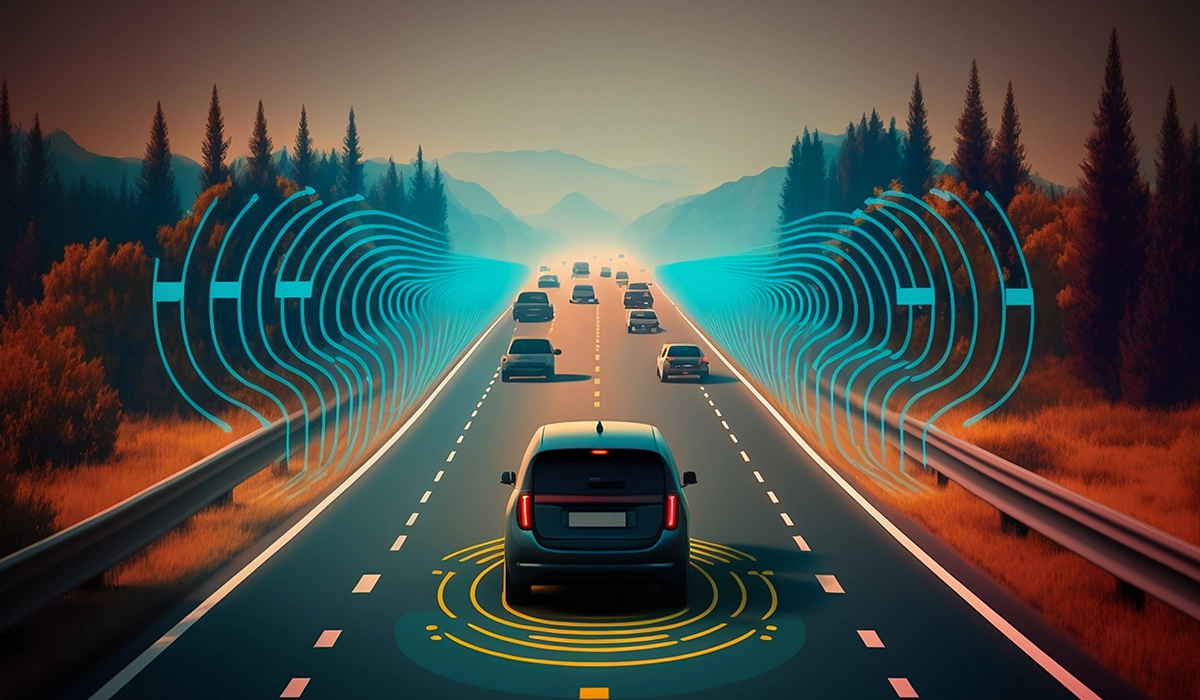
It is impossible for autonomous systems to train themselves in every possible road scenario by using data collected from the actual environment. Using synthetic data enables autonomous technology developers to address rare situations and validate their choices while maintaining safety in traffic.
The quality of simulation can never exceed that which it simulates. Realistic image representation, accurate physical laws, and real-world validation are all part of the balancing act. The coming advances in autonomous AI will rest on just how well developers are able to bring recorded experience together with simulated scenarios. We’re not so much trying to eradicate uncertainty (which may be impossible), as prime systems to respond more predictably when the known meets the new.