

Walmart has overturned the blindness that it is just a retail store for groceries; instead, it is a logistics and technology-focused company that undertakes retail operations. The old Just-in-Time model is fading. Today, Walmart uses a Just-in-Case predictive approach. Products are moved and stocked before a customer even clicks buy. This is the power of the Walmart AI supply chain.
In fiscal 2025, Walmart generated US$ 681 billion in revenue. Consolidated net income jumped to US$ 20.2 billion, up from US$ 16.3 billion the year before. It employs roughly 2.1 million associates worldwide, all working alongside AI systems that guide decisions and operations.
The real game-changer is the agentic AI architecture. Software autonomously decides where inventory moves, when shipments leave distribution centers, and how stores manage fulfillment. Walmart is not only optimizing internally. It is also turning its technology into a B2B SaaS product through Walmart Commerce Technologies. The company has proven that supply chains can be intelligent, adaptive, and strategic, not just operational.
The ‘Pre-Positioning’ Forecasting Engine
Walmart is not just stacking shelves anymore. It has quietly turned its stores and distribution centers into a giant predictive network. One that thinks ahead of the customer. The old Just-in-Time model is fading fast. Instead, Walmart is using a pre-positioning strategy. It moves products closer to where they will be needed before anyone clicks buy. This is where the Walmart AI supply chain becomes obvious.
At the core of this system is a probabilistic demand model. It does not rely on last week’s sales alone. It digests billions of data points. Historical purchases, local events, weather changes, and even social media chatter all feed into it. The system learns and anticipates spikes. A heatwave might suddenly boost ice cream sales. A local festival could increase snack demand. Walmart’s AI moves products from regional distribution centers to stores or fulfillment hubs in anticipation.
The inventory intelligence layer is what really changes the game. Before, online stock and store inventory were separate. This caused delays and stock-outs. At present, AI brings everything under a single vision. Stores have changed their roles and are no longer serving just the in-person customers. They play the role of local delivery centers. In this way, they are able to deal with the demand from both online and offline shoppers simultaneously.
What makes it even smarter is the agentic AI framework. The software makes decisions on its own. Managers set general guidelines. The AI takes care of everything including deciding the time and place of moving the stock, planning the trucks’ routes, giving priority to the goods, and adjusting to the variations in the supply. In addition, it trains itself always based on the fresh data. This reduces mistakes. It speeds up response times. Customers rarely see empty shelves or late orders.
The combination of huge data processing, predictive modeling, and autonomous execution turns Walmart’s supply chain into a machine that reacts before problems happen. It is not just moving goods. It is thinking. It is learning. It bridges the gap between what customers want and when they want it. All silently. All efficiently.
The Physical Automation Layer with Symbotic & Robotics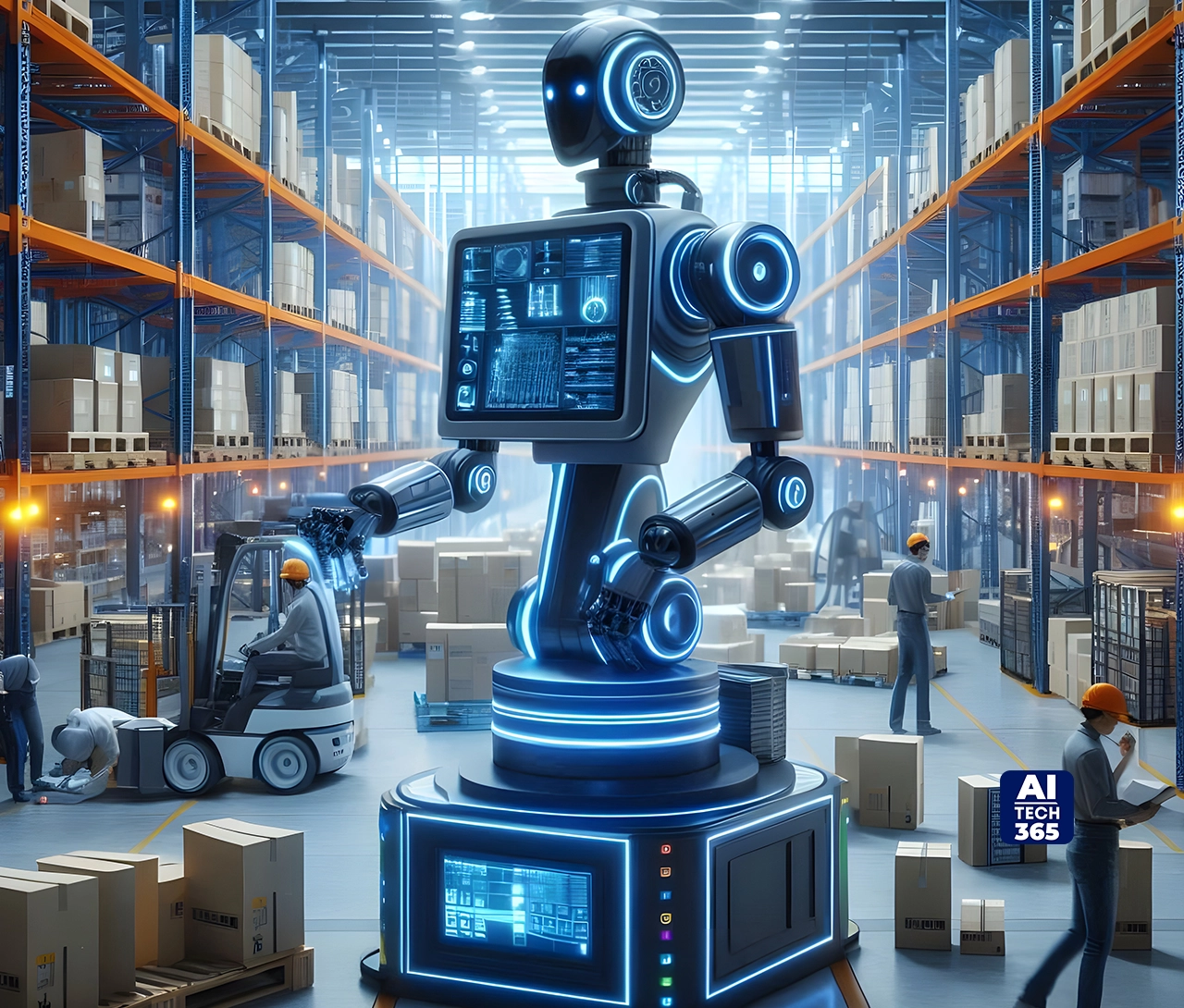
Walmart’s warehouses are no longer what they used to be. This is not just robots running around. It is a complete rethinking of the distribution center. The partnership with Symbotic has changed everything. They looked at every step, from unloading trucks to getting items on shelves.
Manual palletizing is gone. Symbotic’s robots now do the work. They build mixed-SKU pallets in a way that matches the exact aisle layout of each store. It is like playing a perfect game of Tetris with real products. When the truck arrives, pallets are ready. Items go straight to the shelf. Labor at the dock is reduced. Processes are faster. Mistakes are fewer.
Walmart also uses agentic AI to manage the workflow. These AI agents do the small decisions that add up. Assigning robots to different jobs, selecting the optimal paths, and even taking over the driver assignments are some of the functions performed. In the event of a lane being blocked, the system will immediately reroute the traffic. It doesn’t take a person to inform it what to do; it acts on its own. It adapts in real time.
The human side is covered too. Associates have AI-driven task management tools. They know exactly what to do and when to do it. Tasks are prioritized automatically. Instructions are translated in real time into 44 languages. No one is left guessing. GenAI-powered workflows help associates handle store operations smoothly. It all works together. Robots, AI agents, and humans are coordinated in one system.
Also Read: RAG vs. Fine-Tuning: Which Delivers Better Enterprise Accuracy?
The result is a fully automated, highly responsive distribution process. Trucks move faster. By stocking the shelves more efficiently, there is a shift of labor from repetitive tasks to value-added work. The union of robots and AI software becomes a system that is capable of learning, adapting, and doing without needing human guidance all the time.
Walmart is demonstrating that a supply chain can still be flexible and not strictly controlled. They have partnered with Symbotic to create a distribution center that has the ability to think beforehand, self-correct, and collaborate with workers without any hiccups. This is the next phase of the implementation of the Walmart AI supply chain that is going to be smarter, quicker, and more dependable than ever before.
Real-Time Logistics & The ‘Dynamic Window’
The last mile is always the toughest part of any supply chain. It costs the most. Trucks get stuck in traffic. Pickers wait at stores. Delivery schedules change constantly. Walmart knew that to make its supply chain smarter, it had to fix this.
The solution came in the form of AI-powered route optimization. Static delivery slots were replaced with real-time updates. The system can adjust schedules minute by minute. Drivers get new instructions on the fly. If a road is blocked or a store is busier than expected, the AI reroutes immediately. It does not just plan ahead. It reacts while things are happening.
The geospatial intelligence behind this is impressive. Driver GPS, road network changes, and store busyness all feed into the calculations. The system predicts accurate ETAs for every delivery. It is more than a map. It is a logistics brain built for the unique complexity of Walmart’s network.
Walmart also thinks about efficiency beyond speed. Trucks are packed with cube efficiency in mind. Every inch of space is used. Miles are saved. Less fuel is burned. Fewer trucks are needed. This makes the system faster, cheaper, and more sustainable.
The AI-driven route optimization tool is also available as a SaaS product through Walmart Commerce Technologies. Businesses can now access the same intelligence Walmart uses internally. They can plan deliveries dynamically, optimize truck loading, and track progress in real time. It turns a traditionally reactive part of logistics into a proactive, self-correcting process.
Walmart’s supply chain is one of the most sophisticated globally because of the incorporation of AI, real-time data, and eco-friendliness. It is not merely a matter of transportation of goods from one place to another. The whole process of transportation is done in a more intelligent way. The trucks, the drivers, the stores, and the software are in perfect harmony with one another. Every minute and every mile is optimized.
Walmart’s approach to the last mile proves that a supply chain can be adaptive, efficient, and green. It shows how technology can transform an expensive, unpredictable part of the business into a competitive advantage. This is what makes the Walmart AI supply chain not just functional but strategic.
What Supply Chain Leaders Can Learn
Walmart is no longer just a retailer. It is also a tech company selling its own tools. The Route Optimization system, once used only internally, is now available as a SaaS product through Walmart Commerce Technologies. Businesses do not have to compete with Walmart anymore. They can rent Walmart’s brain and apply the same intelligence to their own logistics.
The first lesson is data unification. AI only works if all your inventory data is in one place. Online stock and store inventory cannot live in separate silos. Walmart’s single view of inventory is the foundation of its predictive and autonomous operations.
Next comes modular automation. You cannot automate everything at once. Walmart built standard modules that can be deployed regionally. This allows systems to scale without chaos and prevents small errors from multiplying across the network.
Transparency is the third key. Customers and B2B partners now expect full visibility. Track and trace is no longer optional. Walmart shows every step of the process.
Finally, Walmart builds its own ML and LLM systems for search, ad relevance, and internal analytics. These models move from experimental ideas to production-ready tools that power merchant insights and drive operational decisions.
For supply chain leaders, the message is clear. Technology, intelligence, and transparency are not optional. They are the backbone of a modern, competitive supply chain. Learning from Walmart’s approach is no longer a choice. It is a necessity.
The Autonomous Future
Walmart’s AI supply chain shows what is possible when prediction, automation, and optimization work together. Software anticipates demand. The robots and AI take responsibility for the heavy lifting while logistics mold to life real-time, keeping on adjusting. It is not just about moving goods faster. It is about moving them smarter. Walmart has turned its supply chain into a data product that thinks, learns, and adapts. For any business, the lesson is clear. Audit your own inventory intelligence before investing in heavy robotics. Understanding your data and processes comes first. Only then can technology deliver real impact.