Most companies are stuck. Pilots everywhere. Trying tools. Testing stuff. Nothing really sticks. Nothing really scales. You can call it pilot purgatory. Meanwhile, a few are moving. Fast. Really fast. The top 1 percent. The ones becoming AI-Native. Not just using AI here and there. But building it into the core. The operating system. Data doesn’t just sit there. It is active. Vectorized. Ready to feed decisions every second.
Only 2 percent of firms are ready for large-scale AI adoption. That’s what the World Economic Forum says. That tiny group is already seeing results. The firms that are at the forefront in using AI posted a revenue increase of approximately 15 percent compared to the others.
In the year 2027, the difference will not be in the technology. It is about how organizations move. How fast they learn. How fast they decide. How fast they adapt. AI-Native enterprises will think differently. Move differently. Win differently. The rest will keep running pilots and watching.
From Hierarchies to ‘Neural’ Networks
Companies have been built like machines for years. Marketing does its thing. Sales does its thing. IT does its own thing. Everyone stuck in their box. Everyone protecting their turf. Measuring success only in their own corner. That world is breaking. The companies that win now are not the ones who follow instructions perfectly inside their box. They are the ones who move fast. Learn fast. Change fast. This is the move from hierarchies to what you can call neural networks. Organizations that act less like pyramids and more like living systems. Intelligence flowing everywhere.
The AI Fabric is at the center of this. Think of it like the nervous system of a company. ERP, CRM, HRIS, analytics systems. They used to live alone. They spoke different languages. Every handoff was a fight. The AI Fabric connects them. Makes them speak the same language. Turns data into insights you can use. Every part of the company sees the same signals at the same time. Humans are not replaced. Humans are amplified.
Human roles are changing too. Doing tasks over and over, copying reports, chasing approvals, all gone. Now humans orchestrate. Guide AI agents. Edit decisions. Make sure the results make sense. Humans become the conductors. They make the complex system sing the right way.
This is not imagination. The World Economic Forum says global employers are reorganizing around AI. Upskilling people. Redesigning teams to work with intelligent systems. This is happening. Now. This is what AI-Native enterprises will look like in a few years.
It is a cultural shift as much as a technical one. Old silos have to go. You have to trust AI to handle heavy work. Decisions will happen faster, sometimes in real time. Companies that get this will outpace everyone else. The rest will stay stuck in pilot purgatory. Trying experiments while the world moves on. You either get it or you don’t. The clock is ticking.
Also Read: AI Regulation and Enterprise Readiness: What 2026 Will Demand
The Agentic Stack & Vertical Intelligence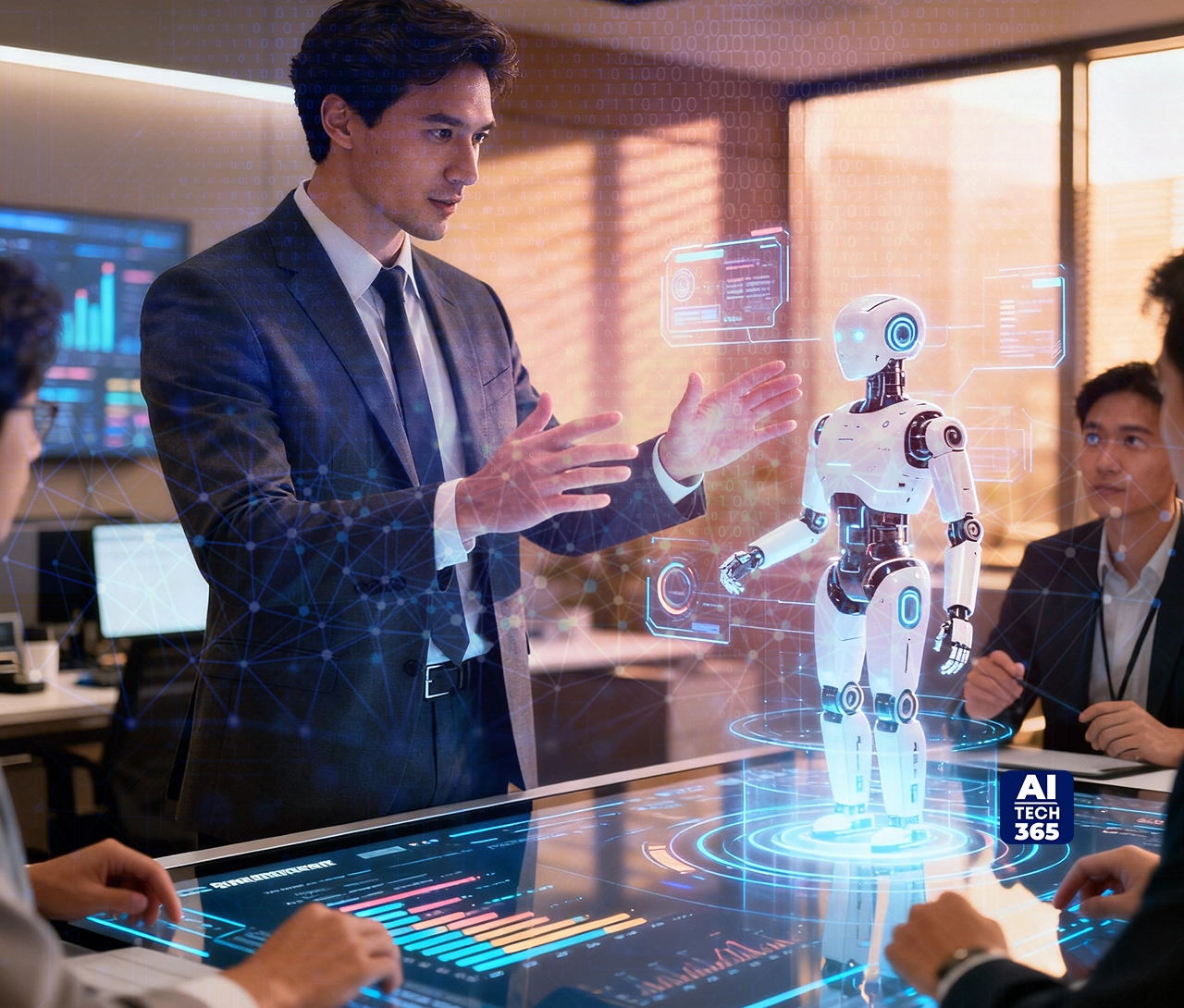
2027 will not be about a slightly smarter ChatGPT. Forget that. It will be about systems that talk to each other. Multiple models. Each specialized for something different. One for sales insights. One for supply chain logistics. One for legal review. They share data, pass signals, make decisions together. That is what people mean when they say compound AI systems. Not one model doing everything. Many small models doing what they do best and talking to each other.
The trend is clear. Small Language Models are winning over big ones. Cheaper to run. Faster. Easier to adapt. You don’t need a 100-billion parameter model to figure out your inventory or price a product. A tiny, specialized model can do it better and quicker. And you can run ten of them instead of waiting for one giant system to catch up. OpenAI’s GPT-OSS-120B is a good example. It is optimized for flexible, cost-efficient deployment. You can plug it in where it matters, not everywhere.
Then there is the agent economy. Think internal marketplaces where AI agents exist like workers. You have a Data Analysis Agent that talks to a Copywriting Agent. They hand off tasks without humans touching every step. They negotiate, combine insights, and produce outputs that used to take whole teams weeks to finish. Humans supervise, guide, and make judgment calls. Humans decide if it is good enough. That is it. The system does the heavy lifting; humans steer the ship.
Infrastructure makes all this possible. OpenAI and AWS teamed up in 2025 to supply hundreds of thousands of GPUs and tens of millions of CPUs. That is not a small deal. That is massive scale for enterprise AI. It allows companies to run multiple specialized models at once. It makes the agent economy feasible. It makes AI-Native enterprises possible.
By 2027, companies will not just buy AI tools. They will build networks of intelligent agents. They will deploy small, fast models to solve vertical problems. They will automate complex processes and still keep humans in the loop for judgment. The future is not about replacing people. It is about multiplying what they can do. And the winners will be the ones who figure out how to orchestrate it all.
The ‘Human-in-the-Loo’ Constitution
AI is making decisions all over the place now. Every day, in finance, in marketing, in operations. That is exciting. But it is also scary. The more decisions AI makes, the higher the chance of silent errors. Small mistakes. Things you don’t see at first. Wrong assumptions. Bad data. Tiny biases that slip through. By the time someone notices, it can already cost a lot. Companies cannot pretend this is not happening.
That is why new roles are showing up. AI Governance Office. Model Risk Management teams. They are becoming standard at the top. Like cybersecurity teams used to be. Their job is simple. Watch the AI. Check what it does. Make sure it does not go off track. They set rules. Create policies. Make sure every AI action can be traced. It is not about slowing things down. It is about trust. Without trust, AI cannot scale.
Auditability is key. Every decision the AI makes needs to be recorded. Understandable. Reviewable. Like a black box on a plane. Something goes wrong, you can trace it back. Explainable AI is not optional. Leaders will insist on it. Regulators will insist on it. Employees will expect it.
Humans stay in the loop. Checking. Guiding. Editing. AI handles speed and complexity. Humans handle judgment and ethics. That is the balance. That is what separates AI-Native enterprises from the rest. Ignore it, and you stumble. Silent failures. Loss of control. Damage to credibility before you even notice.
Trust, governance, transparency. Not policies. Survival tools. Companies who get this right gain an edge that tech alone cannot give. The rest will pay for underestimating it.
The Speed of Learning
Decisions used to move slowly. Quarterly Business Reviews. One slide deck after another. Charts. Numbers. Everyone nodding. Waiting for the next quarter to act. That world is gone. AI-Native enterprises move differently. Continuous Review. KPIs tracked in real time. AI flags issues. Suggests pivots. Daily, not quarterly. Decisions happen fast. Faster than any human meeting schedule.
Monday morning meetings are different too. Forget the 45-minute recap. Leaders don’t sit and stare at old numbers. They spend an hour debating the future. AI presents scenarios. Different outcomes. What if sales dip? What if supply chain slows? What if a competitor moves first? The team reacts. They decide. They adjust. In real time.
The speed of learning is what matters. AI digests data across the company, across departments, across regions. Humans focus on judgment. Ethics. Strategy. Together they make the system smarter every day. Mistakes are caught early. Wins are amplified fast.
Companies that cling to old rhythms will fall behind. AI-Native enterprises are not just faster at doing things. They are faster at seeing, learning, and adapting. And in a world that changes daily, that speed is survival.
The Survival Metric
Everything we talked about comes down to four pillars. Neural structures that replace silos with intelligence flowing everywhere. Agentic platforms where small models talk, collaborate, and get things done fast. Rigid governance that catches silent errors, keeps humans in the loop, and makes AI accountable. Real-time rhythms that turn slow quarterly reviews into daily decisions. This is the real backbone of AI-Native enterprises, the ones that actually move instead of just talk.
Technology is everywhere now. AI is not magic. Everyone can buy it. The edge is not in having the tools. The edge is in how you use them. How you orchestrate people and machines together. How fast you learn, pivot, and execute.
Look at your roadmap. Are you building for 2024’s hype? Or are you building for 2027’s reality? The difference will separate the leaders from the laggards. The choice is yours. Start today, or watch the top 1 percent leave you behind.