
Here is AITech365’s Weekly Roundup of the top news from global markets. In this fast-paced world, breaking down information helps readers grasp the nuances that follow the news.
In Automation in AI news this week…
Aetina Introduces AIE-KT78/68 for Integrated AI Perception, Decision-Making and Control in Robotics
The new edge AI systems support local multimodal generative AI, LLM, VLM and VLA model execution while connecting high-resolution sensors with motors, joints and actuators through high-bandwidth interfaces and EtherCAT control.
In Martech news this week…
Granicus Enhances Government Experience Cloud with AI-Driven Intelligence Platform
Granicus, the top company delivering experience software solutions for the public sector, has unveiled the enhancement of its Government Experience Cloud (GXC), through the introduction of Government Experience Insights (GXI) Professional, an analytics and intelligence solution using AI to deliver an optimal digital service experience in the public sector.
In Healthcare news this week…
Deloitte and Salesforce Launch Agentforce-Powered CRM Accelerator for Mid-Sized Life Sciences Companies
In an expansion of its strategic alliance with Salesforce, Deloitte has launched FastForward™ for Life Sciences, an agentic AI-infused customer relationship management (CRM) accelerator specifically designed to streamline front-office operations for mid-sized organizations. Arriving 70–90% pre-configured, the solution cuts traditional implementation timelines in half, allowing companies to go live in just four to six months rather than enduring multi-year software rollouts.
In Business Technology news this week…
Securing the Agentic Frontier: Salt Security and CrowdStrike Expand Partnership to Protect AI Agents
As companies move from testing out Generative AI to employing autonomous AI agents, there is a drastic change occurring in the cybersecurity landscape. Contemporary AI agents not only produce the text but have credentials to access, establish connection to enterprise systems via MCP server and proprietary solutions, call APIs, and execute workflows.
In Cloud news this week…
Saturn Cloud Integrates NVIDIA Run:ai to Help GPU Operators Build High-Yield AI Inference Businesses
Saturn Cloud, an AI token factory platform, has integrated NVIDIA Run:ai, the workload and GPU orchestration software, into its core infrastructure. This integration allows neocloud and AI factory operators to convert GPU hardware historically rented on an hourly basis into multi-tenant, per-token AI inference services under their own custom branding.
In IT & DevOps news this week…
TestMu AI Introduces the Assurance Lifecycle in Kane CLI to Bridge the Validation Gap in AI-Driven Development
TestMu AI (formerly LambdaTest), a pioneer in agentic AI-powered quality engineering, has officially launched the Assurance Lifecycle within its Kane CLI tool. This major update extends Kane CLI beyond basic browser automation and test playback, enabling software engineering teams to convert Product Requirement Documents (PRDs) and technical specifications directly into verifiable, auditable test coverage.
In Cybersecurity news this week…
Sectigo Enters QSPM Market with Sectigo Quantum Ready™ to Drive Enterprise Crypto Agility
Digital trust and automated Certificate Lifecycle Management (CLM) leader Sectigo has introduced Sectigo Quantum Ready™, officially marking the company’s entry into the Quantum Security Posture Management (QSPM) market. The cryptographic discovery and risk management solution is engineered to give enterprises total visibility over their cryptographic assets, evaluate post-quantum cryptography (PQC) exposure, and construct actionable transition roadmaps.
Insight of the Week
AI Supply Chain Security: Protecting Models, Data and AI Dependencies
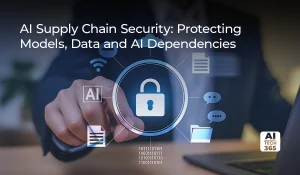 AI security has a visibility problem. Most enterprises know which AI models they use. Far fewer can confidently say what sits underneath those models, where the training data came from, which libraries are involved, what APIs are connected, or what a third-party tool can actually access.
LLMOps vs MLOps: What Changes When Enterprises Deploy Generative AI?
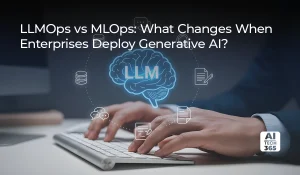 Some enterprises treated generative AI like it was easy. They were wrong. The hard part is not showing a model that can write something good for a demo. The real challenge starts when many workers rely on it every day. You have to make sure the output stays helpful. You also need strong protection, clear records of what it used, and costs that do not blow up.