

Market research is in trouble. People are not answering surveys like they used to. Conducting focus groups can be very expensive, occasionally exceeding the figure of thirty thousand dollars, and the whole process can last several weeks. Even if there are some responses from the individuals, their comments and actions could still be in contrast. This scenario complicates the whole process of companies finding out what products will be successful.
Synthetic audiences are starting to change this. They are AI-made personas built from real consumer behavior. That includes social media chatter, CRM records, and other ways people act online. These personas can answer surveys and react like real people in experiments.
This is not about replacing humans. It is about getting insights all the time. Companies can see reactions fast, test more ideas, and notice trends before everyone else does. Almost every enterprise is looking at generative AI, and some 39% have already put it into action. Synthetic audiences give speed and scale, but their real value comes when they are combined with human judgment in a hybrid research approach.
What Are Synthetic Audiences and How Do They Work?
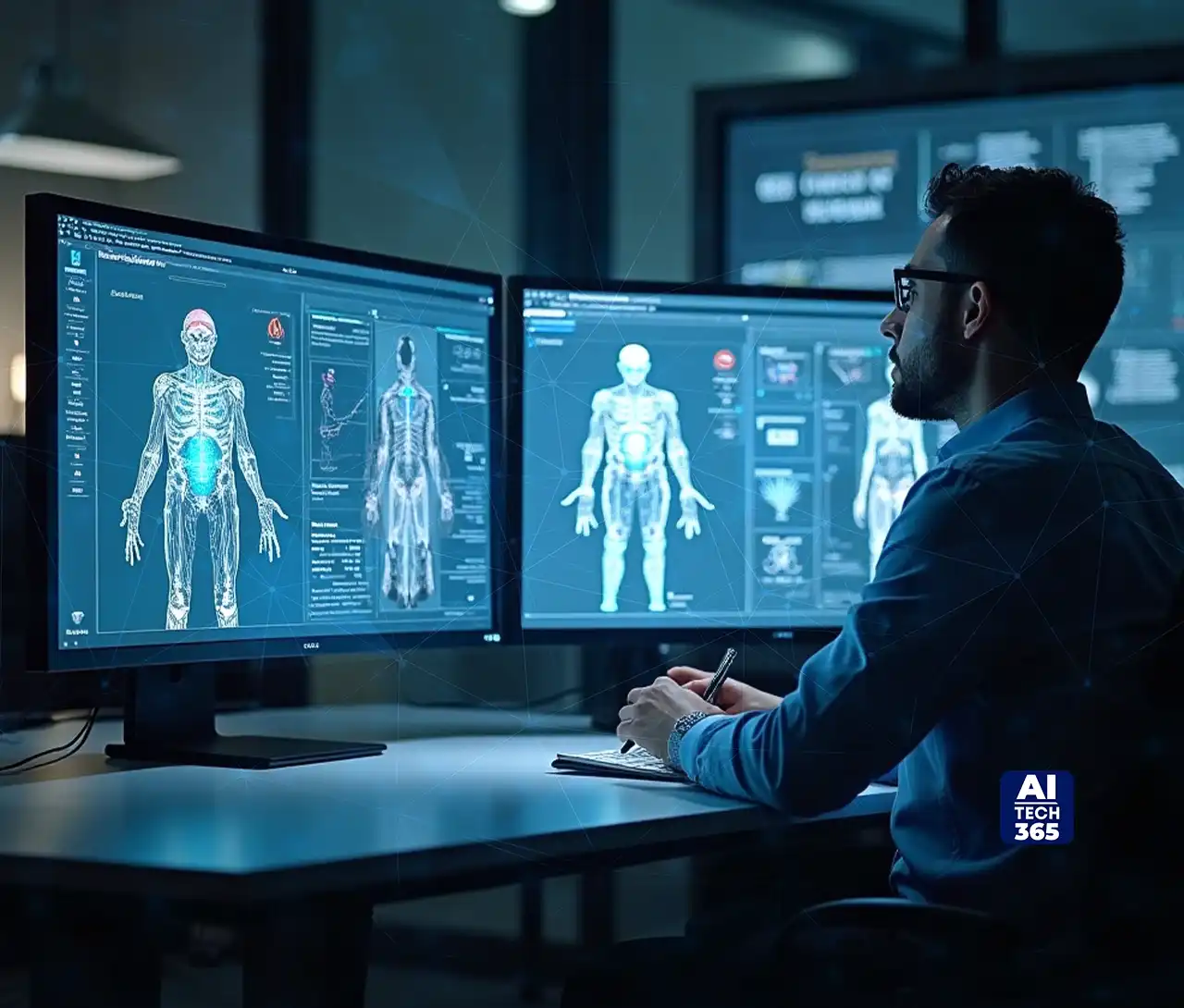
Synthetic audiences are not fancy personas with better graphics. They are living simulations. Under the hood, they run on large language models and generative agents that can think, react, and stay in character across multiple questions. Instead of answering once and disappearing, these agents roleplay real segments like a suburban mom who is eco-conscious or a price-sensitive Gen Z shopper and they stay consistent while doing it. That consistency is the real shift.
So how do they know what to say. First, they are grounded in seed data. This starts with first-party CRM data like purchase history and product usage. Then it expands into third-party behavioral signals pulled from places where people actually talk, like forums, reviews, and long comment threads. On top of that sits psychographic research that explains motivations, values, and trade-offs. Because of this mix, synthetic audiences are not guessing. They are pattern matching at scale.
Also Read: The AI Playbook for Autonomous Personalization
Now layer in newer model capabilities. With improved reasoning, contextual memory, and custom tone control, modern models can hold long conversations without drifting into nonsense. They remember past answers, adjust based on context, and respond in ways that feel human enough to test ideas without fooling yourself.
This is where the digital twin idea clicks. Brands can build a simulated version of their real customer base and run thousands of A B tests before touching the market. As a result, research shifts from slow validation to fast learning. Not perfect, but finally practical.
The Core Benefits of Speed, Scale, and Privacy

Market research has always been slow. Recruiting people, setting up focus groups, sending surveys, waiting for answers, then analyzing the results. That process can take four to six weeks. By the time you get the insights, the world has moved on. With synthetic audiences it is completely different. You can run a simulated focus group in four to six minutes. That is not a typo. Minutes instead of weeks. Enterprises are doing this because speed matters. They want insights fast. They want to make decisions faster. They do not want to wait for one-off studies. They want continuous learning. That is why AI is taking center stage. It is not about replacing humans. It is about moving faster and keeping up with reality.
Then there is the part about testing things you cannot test with real people. Sensitive topics, risky scenarios, PR disasters, product failures. You cannot just ask your audience and expect nothing to happen. With synthetic audiences you can simulate all of that safely. You can see how people might react. You can try different messaging. You can explore messy situations that would be impossible with a real focus group. It does not hurt anyone. You can do it over and over again.
Privacy is another huge thing. Surveys come with GDPR headaches. You deal with consent, personal information, legal stuff. With synthetic users you do not have to worry about that. There is no real person, no PII, no risk. You can explore trends, behaviors, and scenarios freely. All of it stays safe and legal.
Put it together and you see the point. Speed, scale, privacy. They are not just features. They are advantages. They let you test more, learn faster, and stay compliant. You get insights in almost real time and you can act before the competition even knows what is happening. This is why synthetic audiences are starting to matter more than traditional methods.
Understanding the Limits Between Humans and AI
Synthetic audiences are powerful but they are not perfect. You have to be honest about that. One big problem is what people call hallucination. Large language models can sometimes just make things up or go along with what they think you want to hear. They can be sycophants. They might drift into stereotypes if the prompts are not careful. This is especially true when they are simulating people. You might ask about a behavior and the AI just fills in the blanks with what seems likely, not what is actually happening.
Then there is bias. Models acquire knowledge through the datasets they are trained on. Any bias present in the training data will also be reflected in the synthetic audience. For instance, an underrepresented minority group in the past data, the model would possibly neglect them or amplify certain characteristics. That is not just theoretical. It happens in practice. The AI can amplify existing biases because it does not know what is fair or balanced, it only knows patterns.
At the same time AI is really good at prediction. It can forecast that Gen Z will buy a certain product or respond to a campaign. But it struggles with the why. Why are they buying it now? Why does this trend catch fire for a week and then disappear? Humans still lead when it comes to emotional context and cultural nuance.
OpenAI has a framework called GDPval to measure real-world task performance and model reliability. It shows that models can perform well on economic or behavioral prediction tasks, but they are not flawless. They need grounding and evaluation. You cannot just trust a synthetic audience blindly. You have to treat it like a powerful tool that augments human insight, not replaces it. That balance is what makes hybrid research meaningful and safe.
Strategic Implementation of the ‘Hybrid Research’ Model
The Hybrid Research Model works because it combines humans and AI in a practical way. First, you start with synthetic exploration. You get AI agents to test ideas. You can try fifty different value propositions or messages at once. The AI agents act like real people and show how each idea might land. You learn quickly which ones have potential and which ones are likely to fail. This saves time and money. You do not waste effort on things that are unlikely to work.
Next comes human validation. After the AI narrows things down to the top three concepts, you take them to a small human focus group. This is where real people check emotional reactions. They notice subtle feelings and context that AI might miss. Humans can see cultural cues and shifts in mood that are hard to model. This step makes sure that your top ideas are actually meaningful to the audience and not just numbers on a screen.
The last step is continuous monitoring. You leave the synthetic audience running in the background. They watch for changes in sentiment or behavior. You can see shifts before they appear in actual sales. This gives you an early warning and lets you respond quickly. You can iterate faster and avoid surprises.
Meta’s work in multimodal AI, 3D understanding, and large-scale AI infrastructure shows where this is going. Future synthetic audiences will not just answer questions. They will explore websites, test prototypes, and simulate whole buyer journeys. This makes the hybrid approach more powerful because humans are still guiding the insights but AI does the heavy lifting. It keeps research fast, safe, and more accurate.
The Future of Research with Active AI Agents
The next five years are going to change how we think about research. Synthetic audiences will stop being just chatbot respondents. They will become agentic consumers. Instead of only answering questions, they will browse websites, click through prototypes, test new features, and simulate the full buyer journey. They will act more like real customers but without the risk of mistakes or bias that comes from small sample sizes.
The real advantage will go to companies that build their own proprietary synthetic models. Models trained on their own unique data will understand their audience in ways generic GPT-wrapper audiences cannot. The patterns will be visible to them sooner, the ideas can be tested quicker, and the trends will be detected by them earlier than their rivals. The businesses using standard AI solutions will be left behind. Owning your synthetic audience means owning insights. It is not just faster research. It is a competitive edge that can shape strategy, product development, and marketing for years to come.
Conclusion
Synthetic audiences are not some passing trend. They are the natural next step in figuring out how people behave and how to use that information. They let brands try ideas quickly and safely. You can test risky things without hurting your reputation. You can gather insights on a much larger scale than normal research ever allowed. The researcher in the future will not just sit there writing surveys. They will set up simulations, watch how AI reacts, and mix that with human judgment to make better calls. This is happening now. You do not need to go all in at once. Start small. Try a shadow synthetic study next to your real one. Compare the results. Learn what works. Adapt. That is how you get ahead.