

Marketing once ran on a comfortable fiction. Put people into buckets and call it strategy. Millennial. Suburban. High income. The labels looked neat on a slide deck and felt manageable for teams that had to plan campaigns for millions. The truth, however, was simpler. Humans grouped customers because our brains needed shortcuts.
That era is fading quickly.
What we used to call hyper personalization mostly meant adding a first name into a template or sending a slightly different email to five segments instead of three. It felt advanced at the time. Yet it was still marketing designed for crowds.
Now the game is changing. AI can understand behavior at a level that marketers cannot process manually. It reads signals, predicts intent, and assembles experiences for one person at a time. This is where hyper individual marketing begins. It moves the focus from audiences to individuals and from campaign planning to real time decisioning.
In other words, AI is not just improving marketing. It is quietly replacing the idea of a target audience.
The Hidden Bottleneck in Modern Marketing Teams
Marketing teams love to talk about technology stacks. New tools, new dashboards, new integrations. Yet the real constraint rarely sits inside the software. It sits inside the human workflow.
Humans think in clusters. That is how we simplify complexity. We group customers into segments, define rules, and build campaign flows that try to predict behavior. For years that system worked well enough. However, the digital world now moves at a speed that manual thinking cannot match.
AI works differently. Instead of segments it sees vectors. Instead of a few customer groups it reads thousands of signals at once. Every click, search, scroll, and pause becomes a data point. These signals combine into patterns that change from moment to moment.
Meanwhile most marketing automation systems still run on basic logic. If a user opens an email, send another one. If someone downloads a whitepaper, add them to a nurture sequence. The structure looks organized, yet it breaks down quickly when customer intent shifts in real time.
This is why the production side of marketing is starting to crack. Personalization sounds exciting until teams realize how much content it demands. According to research from Salesforce, 78 percent of marketers say they need more personalized content than they can produce. That gap explains why so many campaigns still feel generic even when companies talk about personalization.
The issue is not ambition. It is scale.
If a brand wants to treat every customer as unique, then the system must generate thousands of variations in messaging, timing, and format. No creative team can manually produce that volume. The traditional model where marketers architect every campaign flow simply cannot keep up.
So the role of the marketer begins to shift.
Instead of building every path, marketers increasingly guide the system. They define brand tone, ethical boundaries, and strategic direction. AI handles the constant optimization. Humans protect the brand’s soul.
It is less like building a machine and more like editing a living organism.
The Rise of the AI Native Brand
Some companies still treat AI as an add on. They plug a recommendation engine into an existing system and call it innovation. Yet a different type of company is emerging quietly.
These are AI native brands.
Their customer journey is not pre written. It is generated the moment a user interacts with the brand. When someone opens an app, browses a website, or asks a question, the system assembles the next experience instantly based on that individual’s behavior and predicted intent.
This shift changes how companies think about data.
For years’ marketers focused on first party data. Purchase history, email engagement, and website visits. Those signals still matter. However, AI systems can combine them with something deeper. Predictive understanding.
This is where zero party predictive data starts to play a role. Instead of waiting for explicit actions, systems begin to anticipate preferences before the customer clearly states them. The marketing experience becomes less reactive and more intuitive.
Still, there is a technical challenge sitting underneath this vision.
Identity resolution.
Customers move across devices constantly. They browse on a phone during lunch, open an email on a laptop at night, and complete a purchase from a tablet later in the week. Connecting those moments into a single identity is not easy, especially in a world where third party cookies are disappearing.
The companies that solve this puzzle gain a serious advantage. They can understand behavior across contexts and generate experiences that feel consistent rather than fragmented.
Right now only a small group of organizations operate at this level. Research from Google shows that only 19 percent of companies qualify as AI leaders actively integrating AI across workflows and personalization strategies.
That number tells an important story.
Hyper individual marketing is not yet the industry standard. It is a competitive moat. The brands that adopt it early build systems that become difficult for competitors to replicate.
Also Read: How JPMorgan Built Internal AI Guardrails Without Slowing Innovation
Creative Production Meets the Infinite Versioning Era
For decades’ creative teams worked with a familiar structure. A campaign might require a handful of ad variations, maybe a few audience specific messages, and some localized visuals. The workload felt manageable because the scale of variation was limited.
Hyper individual marketing breaks that structure.
If every customer receives a unique experience, then every message may need multiple variations. Headlines, visuals, tone, timing, and channel can all shift based on context. The math escalates quickly. A campaign that once needed ten variations might now require ten thousand.
Naturally the first reaction from creative teams is skepticism. How can anyone maintain quality when the volume grows that dramatically?
The answer is generative AI.
Instead of manually producing every asset, marketers can train systems that generate creative elements dynamically. The brand provides guidelines, voice, and visual direction. The AI engine assembles variations in real time based on the user’s context.
This is where dynamic creative optimization evolves into something far more powerful. Think of it as DCO 2.0. Rather than testing a few combinations, the system can build entirely new variations on demand.
Adoption is already underway. Research from Salesforce indicates that 63 percent of marketers are already using generative AI in marketing workflows. That number reflects how quickly creative production is changing.
Performance results also show why companies are paying attention. Data from Google demonstrates that AI driven advertising campaigns can improve click through rates by up to 80 percent while reducing cost per purchase by 31 percent.
Those improvements are not minor adjustments. They represent a structural advantage.
However, the real opportunity is not just better ad performance. It is the ability to speak to individuals rather than audiences. Every impression becomes a chance to present a message that fits the moment.
When creative systems operate at that level, marketing stops feeling like advertising. It begins to feel like assistance.
Strategic Implementation from Data Silos to Intelligence Lakes
The vision of hyper individual marketing sounds impressive. Yet many organizations struggle to implement it for a simple reason.
Their data lives in silos.
Marketing teams often manage dozens of systems. A CRM stores customer records. An email platform tracks engagement. An analytics tool monitors behavior. Meanwhile the advertising team operates in an entirely separate environment. Each platform holds valuable information, yet they rarely communicate smoothly.
The result is fragmented insight.
A system cannot create individualized experiences if it cannot see the complete customer journey. Unfortunately, this issue is widespread. According to research from Salesforce, 98 percent of marketers encounter barriers to personalization, with data silos identified as the biggest obstacle.
This is why many companies are moving beyond traditional CRM structures.
The new architecture centers around a decisioning engine. Instead of storing data passively, the platform analyzes signals continuously and determines the next best action for each user. Think of it as an intelligence layer sitting above the entire marketing stack.
However, implementation brings another important concern.
Trust.
When personalization becomes extremely precise, customers may start to feel uncomfortable. This reaction is often called the uncanny valley of marketing. The experience feels so accurate that it raises questions about privacy.
Smart companies address this challenge through privacy first personalization. They design systems that rely on transparent data practices and clear user consent. Personalization works best when customers feel respected rather than monitored.
In other words, technology alone does not build trust. Intent and transparency do.
The Human Imperative in an AI Driven Marketing World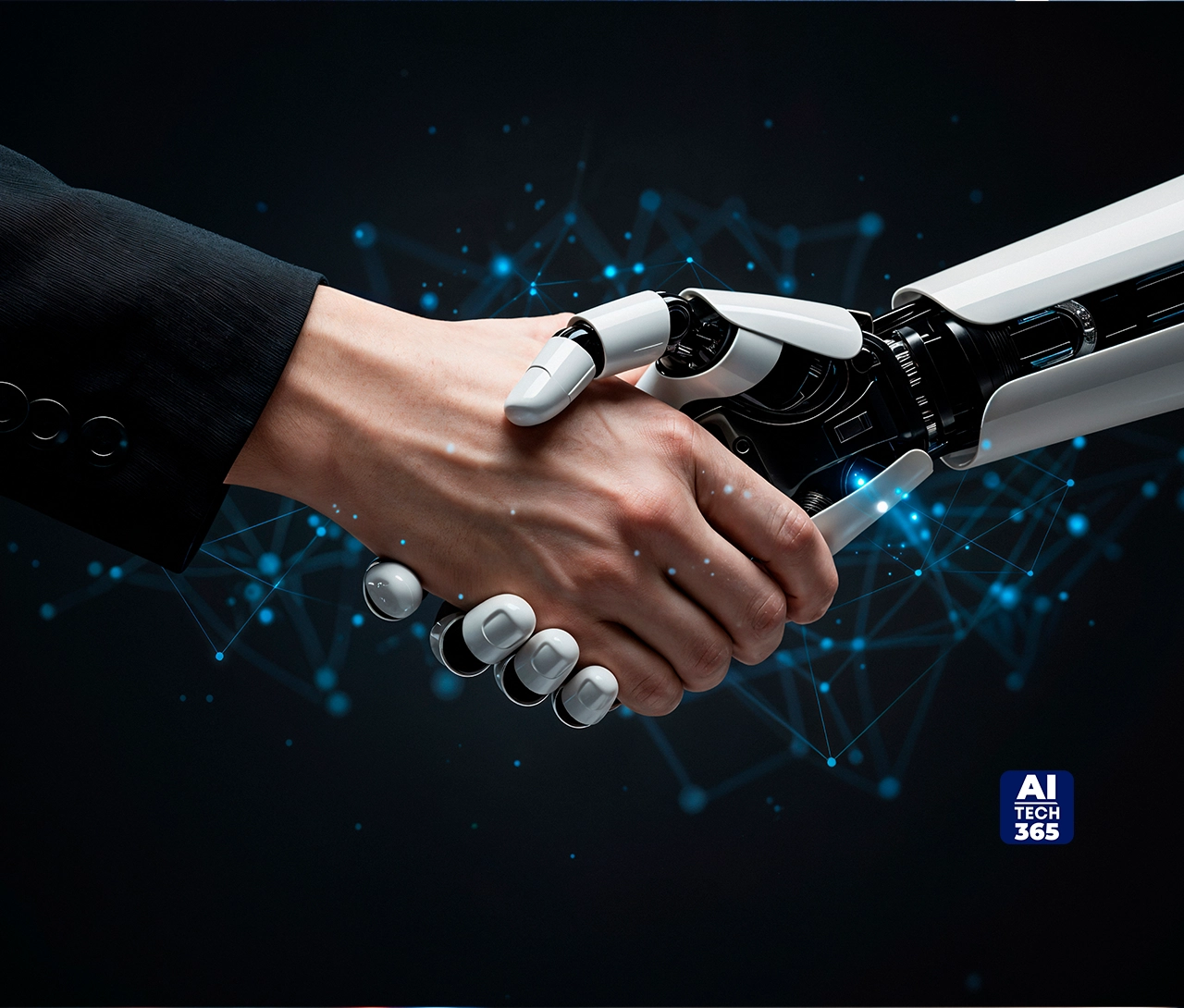
The rise of hyper individual marketing changes many things. Campaign planning becomes real time decisioning. Segments shrink into individuals. Creative production scales beyond human limits.
Yet one element remains deeply human.
Purpose.
AI can analyze behavior and determine the right moment to deliver a message. It can even generate thousands of content variations instantly. However, it cannot decide why the brand exists or what values it represents.
That responsibility still belongs to people.
If AI knows the what and the when, marketers must define the why. The companies that succeed will not necessarily be the ones with the most data. They will be the ones that combine intelligent systems with genuine empathy for their customers.
In the end hyper individual marketing is not about machines understanding people. It is about brands using technology to act more human than ever before.