

By 2030, using AI the way we use tools today will be a mistake. Not a dramatic one. A slow one. The kind that looks fine for a while and then suddenly does not.
Photoshop is a tool. Excel is a tool. They wait. They execute. They never push back. AI does not work like that anymore. And if teams keep treating it the same way, they will fall behind teams that do not.
In 2025, most creative teams use generative AI for efficiency. Faster drafts. More options. Less manual effort. It helps clear workload. It makes delivery easier. That is useful. But it is not the future.
Microsoft’s AI Diffusion Report from 2025 shows that roughly one in six people worldwide already use a generative AI tool. That tells us something important. AI is no longer early. It is already normal. And once something becomes normal, advantage stops coming from access.
The real shift toward 2030 is not about AI replacing creatives. It is about how creativity itself gets structured. Biological thinking on one side. Synthetic intelligence on the other. Working together. Not as equals. Not as enemies. But as collaborators.
This article outlines the three collaboration models that will dominate creative work by 2030. The Centaur. The Orchestrator. And the Provocateur.
The shift from prompting to augmented learning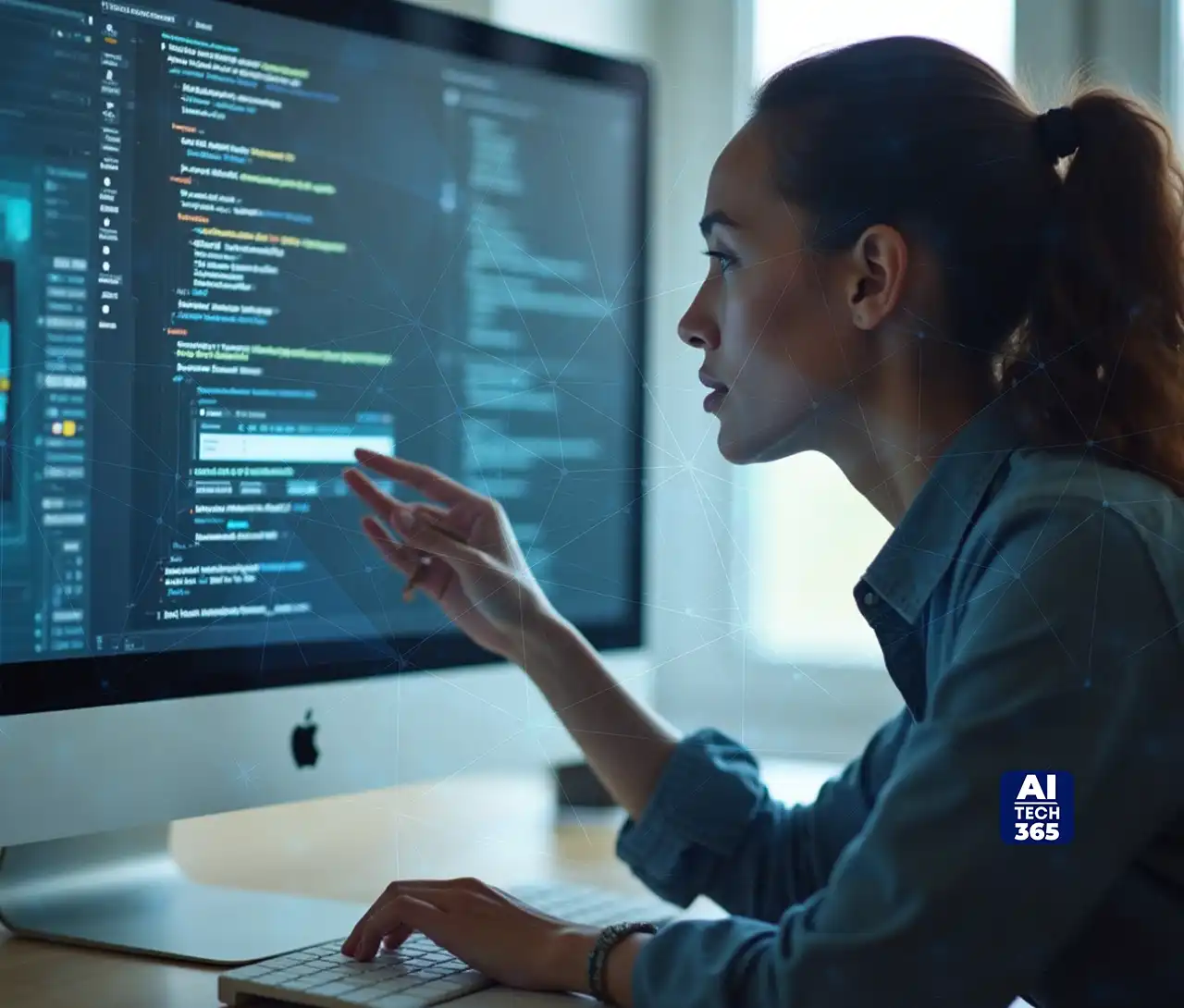
Prompting was never the endgame. It was the on-ramp. Early on, writing good prompts felt powerful. You asked the right question. The machine gave a decent answer. Productivity jumped. But prompts are frozen in time. Creativity is not.
What we are moving toward now is better described as augmented learning. The idea is simple. Instead of telling AI what to do every time, humans teach it how they think over time. What they like. What they reject. Where the line is.
This matters because prompting improves output. Augmented learning improves judgment. There is a growing problem here that many teams feel but struggle to name. The homogeneity trap. When the same models get used everywhere, trained on the same data, outputs start to blur together. They sound competent. Clean. Inoffensive. And forgettable.
UNESCO has flagged this risk clearly. Their work shows that while generative AI is spreading fast across creative and cultural sectors, it also increases the danger of homogenization, loss of diversity, and erosion of creative agency. That is why they push for human centric governance and creative literacy, not blind automation.
This is where the human role starts to change. Creatives stop being valued for how fast they produce. They start being valued for how well they direct. What they choose. What they discard. What they push further when the machine settles for average. Augmented learning is not about smarter AI. It is about more intentional humans.
Also Read: The AI Playbook for Zero-Ops Marketing
The three collaboration models of 2030
This section is about definitions. Clear ones. The kind people can actually use.
Model A: The Centaur or the integrated soloist
What it is
One human paired with a highly personalized AI model. Not generic. Not shared. A system that knows the creator’s style, voice, preferences, and past decisions. This AI does not replace the human. It mirrors them.
How it works
The process feels continuous. The AI suggests. The human tweaks. The AI responds again. It happens fast. Almost conversational. Over time, the AI stops producing internet-flavored output and starts reflecting the creator’s actual point of view. Researchers often describe this as a dance. That metaphor sticks because both sides adjust constantly.
Where it fits best
This model works best for copywriters, senior designers, and strategists with a strong personal voice. Adobe’s Creators’ Toolkit Report from 2025 found that around 86 percent of global creators already use generative AI in their workflows, often to create things they could not have produced alone. That adoption makes sense here. The Centaur model is not about handing work off. It is about extending individual capacity. In AI human collaboration in creative work, the Centaur model is about depth.
Model B: The Orchestrator or the swarm manager
What it is
One creative leader managing a group of specialized AI agents. Each agent does one thing well. Layout. Copy. Compliance. Attention prediction. Nothing overlaps. The human does not get lost in execution. They focus on intent.
How it works
The creative director defines the strategy. Audience. Constraints. Goals. The swarm generates volume. Dozens of variations. Sometimes more. The human then steps back in and selects what is worth refining. This flips the old model. Instead of humans creating options and others choosing, machines create options and humans decide.
Where it fits best
This works well for agencies and in-house teams that need speed and experimentation without sacrificing control. The World Economic Forum estimates that human AI collaboration could generate up to 15.7 trillion dollars in economic value by 2030. That value does not come from machines working alone. It comes from humans operating at a higher level, guiding systems rather than fighting them. In AI human collaboration in creative work, the Orchestrator model is about scale with judgment.
Model C: The Provocateur or the synthetic muse
What it is
An AI designed not to help, but to challenge. It does not aim to produce the final output. Its job is to disagree.
How it works
The human presents an idea. The AI critiques it. Or flips it. Or pushes it in the opposite direction. This friction forces new thinking. It breaks creative loops that feel productive but lead nowhere. Some researchers describe this kind of system as a social actor. Not passive. Not obedient. Actively disruptive.
Where it fits best
This model shines in R and D teams, innovation labs, and rebranding efforts where the biggest risk is repeating old thinking. Within AI human collaboration in creative work, the Provocateur exists to protect originality.
Emerging roles and the new creative org chart
New collaboration models create new jobs. That part is unavoidable. Right now, many companies buy AI tools without changing roles. That gap creates confusion and wasted potential.
McKinsey’s 2025 Superagency in the Workplace report points out that while almost all companies are investing in AI, very few have reached maturity. The missing piece is structure. McKinsey describes the future as a partnership between humans and AI agents, with judgment staying firmly human led. That future needs new roles.
Model Tuner
Someone responsible for keeping private AI models aligned with the brand. Updating them with high performing assets. Preventing drift.
Sentiment Auditor
A role focused on emotional resonance. Making sure AI output still feels human and culturally aware.
Prompt Architect
Not someone who writes clever prompts. Someone who designs workflows. Chains. Feedback loops. Systems that guide AI behavior over time. These roles signal seriousness. They show that AI human collaboration in creative work is no longer experimental.
The trust and taste barrier
When content becomes endless, trust becomes rare. Audiences already struggle to know what deserves attention. As AI generated material floods every channel, quantity will stop mattering. Transparency will help. Human verified signals and disclosures will show when human judgment played a role. Not to shame automation. To signal responsibility.
But the deeper differentiator will be taste. Taste is knowing when something is technically fine but emotionally wrong. When timing is off. When restraint matters more than output. AI can assist. It cannot replace this instinct. In the future of AI human collaboration in creative work, taste becomes the real advantage.
Getting ready for the hybrid creative future
Creative work in 2030 will not belong to humans alone. It will not belong to machines either. It will belong to systems designed for collaboration.
The Centaur deepens individual creativity. The Orchestrator scales strategic intent. The Provocateur keeps ideas honest.
The takeaway is simple. Do not just adopt tools. Redesign how your teams work. Start experimenting with AI human pairs now. The structures you build today will decide whether you lead or fade in the creative economy of 2030.